Completions

Chevron and Halliburton describe how they built and deployed the fully autonomous closed-loop fracturing system that enables subsurface-driven optimization.

Weatherford CEO Girish K. Saligram said the acquisition will bolster Weatherford’s completions offerings and unconventional reservoir capabilities.

Each of these papers presented at SPE conferences exemplifies the continued progress of industry solutions to maximize commercial value of basins within ever-changing oil and gas dynamics.
-
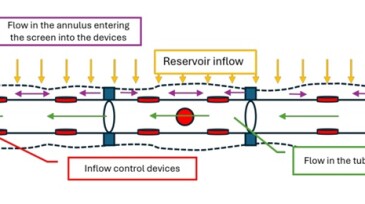
 This paper compares various drainage strategies and well completion configurations on the installation of inflow control technology by considering energy efficiency.
 -
A new tubing-conveyed tool combines wellbore cleanout with multi-tracer deployment for production diagnostics and reservoir monitoring.
-
Technology developers expect the tight-oil industry to give lightweight proppants another look after the Permian Basin’s biggest operator becomes an adopter.
-
Ranger acquires American Well Services for $90.5 million, adding 39 workover rigs and boosting its fleet by 25%.
-
In this third work in a series, the authors conduct transfer-learning validation with a robust real-field data set for hydraulic fracturing design.
-
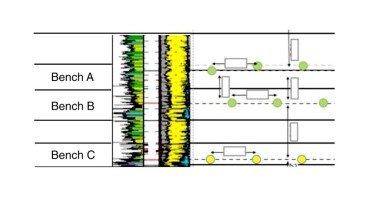
The aim of this study is to incorporate detailed geological, petrophysical, and hydraulic fracturing models to better predict and mitigate the effects of interbench interactions.
-
Outstanding papers over the past year have addressed topics such as casing deformation, well spacing, frac-design optimization, proppant transport in the well or in fractures, integrating diagnostics from field trials, and exploring the effects of lateral length on production.
-
The objective of this paper is to apply a developed workflow to determine the propped hydraulic fracture geometry in a horizontal multistage fractured well, incorporating production, pressure, and strain data.
-
This paper describes development of a high-temperature water-based reservoir drill-in fluid using a novel synthetic polymer and customized with optimal chemical concentrations and sized calcium carbonate.
-
In this case study, a geomechanics-based approach was used to create bridging and sealing at the fracture aperture using a biparticle self-degradable lost-circulation-fluid system.