Completions

This paper presents a study that confirms glass-reinforced-epoxy-lined tubing as a reliable, cost-effective solution for long-term water-injection service in moderate-salinity offshore environments.

This paper introduces in-pipe inspection technologies enabling high-resolution digital measurements of tubular internal diameter and wall thickness for critical downhole applications.
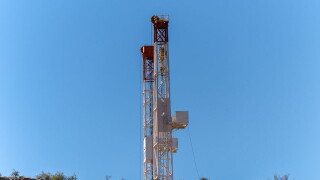
Output is rising fast in the South American shale play and putting Argentina on a course to soon reach 1 million B/D.
-
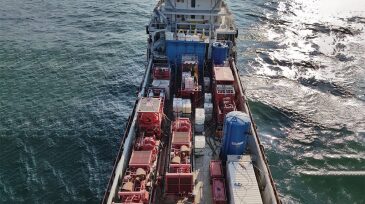
 The complete paper discusses the successful execution of the first offshore multilateral well completed for multistage high-pressure proppant stimulation, according to the authors, in the Black Sea offshore Romania.
 -
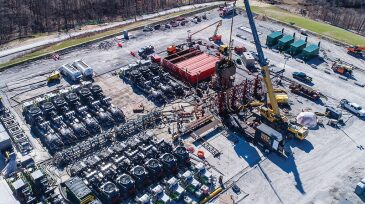
Faster drilling speeds have become one of the major obsessions of the shale sector in recent years. But since completions represent up to 70% of a new well’s cost, maybe this side of the business needs more attention now.
-
The room for error and cost overruns just got a lot smaller with the escalating need to make operations more efficient and leaner with fewer resources and investors continuing to prioritize ESG alongside profitability.
-
While many shale producers are racing to cut costs by removing crews from the field, ExxonMobil and Chevron stood out as maintaining large numbers of fracturing crews.
-
Machine learning can provide accurate prediction of annular pressure buildup, first-year oil production, and (in conjunction with novel casing accessories) the time and location of water breakthrough along a lateral wellbore.
-
Proper lateral and vertical well spacing is critical for efficient development of unconventional reservoirs. Much research has focused on lateral well spacing but little on vertical spacing, which is challenging for stacked-bench plays such as the Permian Basin.
-
The complete paper describes piloting the collection and analysis of distributed temperature and acoustic sensing (DTS and DAS, respectively) data to characterize flow-control-device (FCD) performance and help improve understanding of steam-assisted gravity drainage (SAGD) inflow distribution.
-
The synopses in this feature show how machine learning can provide accurate prediction of annular pressure buildup, first-year oil production, and (in conjunction with novel casing accessories) the time and location of water breakthrough along a lateral wellbore.
-
When engineers went searching for clues on how fractures move beneath the surface, they expected to uncover important learnings. They did not know they were on the path to a new invention.
-
Every horizontal well must pass through the flowback phase before it becomes a true producer. A wealth of insights are generated during this period, but they only matter if an operator knows how to listen and interpret the data sets correctly.