Completions

Output is rising fast in the South American shale play and putting Argentina on a course to soon reach 1 million B/D.
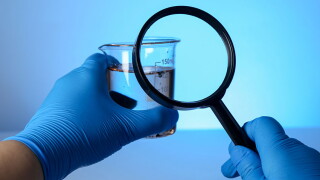
This case study presents a procedure in which the operator compared production from wells with adjusted wettability to a control group, finding that the adjustments resulted in significant improvements in production and reductions in produced water.

This paper presents a study that confirms glass-reinforced-epoxy-lined tubing as a reliable, cost-effective solution for long-term water-injection service in moderate-salinity offshore environments.
-
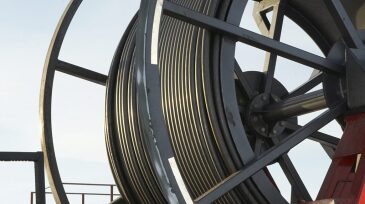
 While increasing coiled-tubing (CT) diameter remains a theoretical option to improve reach, doing so creates logistical challenges.
 -
This work describes the positive results experienced when a self-diverting acid system based on a viscoelastic-surfactant (VES) technology was introduced for carbonate-reservoir stimulation offshore Brazil.
-
This paper describes a matrix-acidizing campaign executed successfully in the Gulf of Cambay on the west coast of India.
-
This paper presents an alternative approach to designing and executing matrix-stimulation treatments in multilayered carbonate reservoirs.
-
Pumping fracturing jobs is an equipment killer. The job requires running enormous quantities of water and sand through a pump, which is an abrasive mix that damages pumps in ways that cannot be fixed. Adding to the pressure is the trend toward clustering wells on pad sites that extend run time.
-
A growing chorus of suppliers, researchers, and service companies is persuading US operators to re-examine their use of slickwater in shale plays and consider displacing it with carbon dioxide and nitrogen.
-
Weather conditions aging offshore facilities presented challenges during a monsoon in the South China Sea.
-
This work will present an object-oriented tracking system that allows CT operators to monitor defects as they evolve over time.
-
Are we really in an industry that is so mature that it is devoid of new thoughts and incapable of generating new concepts to meet the challenges that we face?
-
Hydraulic fracturing solutions use a gelling agent known as guar gum to transport proppant. Flowback water can have guar gum concentrations has high as 1% by volume creating treatment challenges prior to reuse or disposal.