Completions

This edition highlights three offshore technology papers that address a common industry theme: how targeted engineering solutions can reduce uncertainty, shorten operations, and make technically constrained offshore well activities more executable.

Three papers are highlighted as the primary contributions because of their broad industry relevance. They focus on improving formation particle-size characterization, expanding the application of openhole gravel packs in depleted and compartmentalized reservoirs, and advancing the understanding of capillary pressure in sand production.

This paper aims to establish a set of best practices for generating particle-size-distribution data from core samples.
-
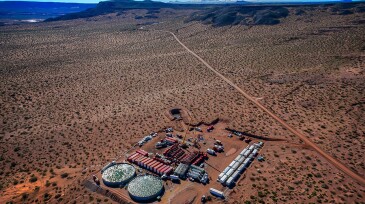
 Even though total produced volumes are projected to hit new record highs in the coming years, treated water is expected to be comparatively lower than in the past, despite water disposal practices increasing oilfield seismic activity, with earthquakes nearly doubling in West Texas alone in 2021.
 -
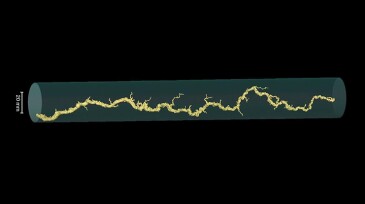
It appears to be possible to sense how fractures change during production using ultrasensitive fiber-optic strain measurements.
-
A rigless chemical frac-hit remediation process was designed to address the damage mechanisms of capillary phase trapping, reduced hydrocarbon relative permeability, paraffin deposition, and minor scale deposition.
-
The disruptive nature of unconventional reservoirs has spurred the need for new ideas. But that doesn’t always mean that we need to toss out the traditional methods that got us here. Such might be the case for the recent developments unfolding around the diagnostic fracture injection test (DFIT).
-
The authors describe a study in which leakage-rate modeling was performed to identify and evaluate the associated risks for designing a remedial action plan to safeguard a CO2 storage site.
-
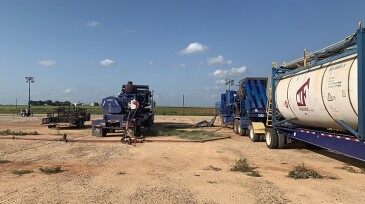
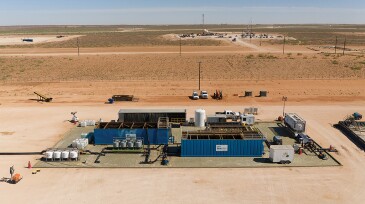
When it comes to produced water from US shale plays, it’s either recycle and reuse or throw it away—and both are easier said than done.
-
The authors write that polymeric additives are effective in the design of complex systems to house important chemical reagents under challenging conditions.
-
Against a backdrop of global uncertainty and challenging economics, well integrity subject-matter experts have continued to prioritize human and environmental safety in production while pivoting their skills toward areas of growing importance such as carbon capture and sequestration. New technologies and simulation methods have allowed the authors of the three SPE pap…
-
This paper examines current practices and developing trends in well construction and describes an alternative cementless approach to the discipline.
-
HCl acid stimulation of carbonate production requires the retardation of the HCl-carbonate rock reaction to achieve the optimum balance between total fluid used and the enhancement of well production. The described investigation was done offshore Sarawak using Indiana Limestone cores.