Data & Analytics

The emerging vision is an industry where engineers focus on judgment, risk assessments, and accountability.

This paper presents the large-scale deployment and operational integration of an advanced, automated rheometer in the Ghawar gas field, one of the world’s most prolific and technically complex hydrocarbon developments.

This study demonstrates the transformative potential of physics-informed neural networks as a hybrid framework for multiphase flow measurement.
-
 The use of artificial intelligence in the clean energy sector increases the availability and accessibility of clean energy, making it a more viable and cost-effective alternative to traditional energy sources.
-
This paper introduces a measurement system that is agile for transport and can be installed anywhere with a small footprint while delivering reasonably accurate results.
-
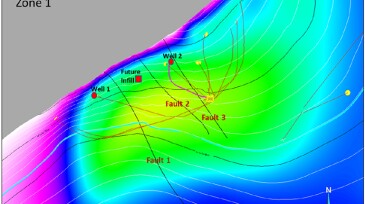
This paper describes how a surveillance, analysis, and optimization plan was used to resolve subsurface uncertainties and optimize a reservoir development plan and provides lessons learned and best practices.
-
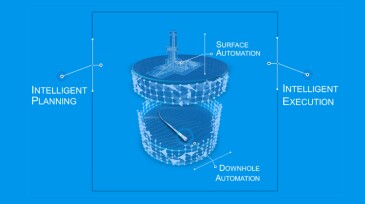
The authors of this paper present an autonomous directional-drilling framework built on intelligent planning and execution capabilities and supported by surface and downhole automation technologies.
-
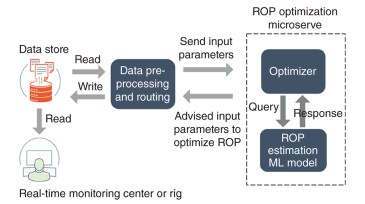
The authors of this paper discuss a global rate-of-penetration machine-learning model with the potential to eliminate learning curves and reduce time and costs associated with developing a new model for every field.
-
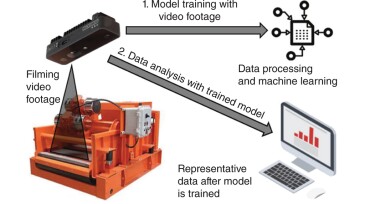
The authors of this paper describe a project that demonstrated the feasibility of using deep-learning and machine-learning approaches to introduce camera-based solids monitoring to the drilling industry.
-
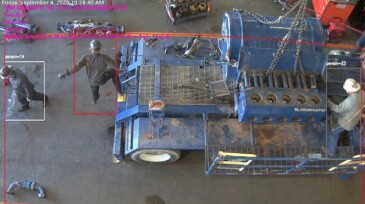
Vision analytics is being used to extract insight information from video, with data inferred from existing cameras used to create a monitoring dashboard where supervisors can receive alerts at the worksite level or drill down to specific events.
-
The oil and gas industry uses a variety of complex systems and technologies that are becoming increasingly vulnerable to cyberattacks. Now, through the Cyber Resilience Pledge, more than 20 global CEOs have committed to work together to improve cyber resilience across the ecosystem.
-
The opening ceremony highlighted maximizing production sustainably to meet global demand, integration of simulation and optimization in a single platform with automation, and energy security.
-
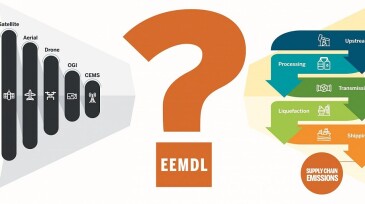
The University of Texas at Austin will be home to a multidisciplinary research and education initiative, the Energy Emissions Modeling and Data Lab, which aims to address the growing need for accurate, timely, and clear accounting of greenhouse-gas emissions across global oil and natural gas supply chains.