Data & Analytics

Switching from continuous circulation to cyclic huff-‘n’-puff operation in enhanced geothermal systems can significantly delay thermal breakthrough, sustain higher production temperatures, and improve long-term economic performance.

The two companies say they plan to work together to use agentic AI to increase the capabilities of technical experts.

This article is the first in a Q&A series from the SPE Methane Emissions Management Technical Section (MEMTS) on methane intelligence and how oil and gas teams translate emissions data into credible decisions and measurable reductions.
-
 Data volumes are growing at an exponential rate. How can high-performance computing solutions help operators manage these volumes? Will faster, stronger processors and cloud computing solutions be the answer?
 -
The two technology startups aim to bring scale to the visual side of oilfield automation with a new deal that will cover 90% of US energy assets.
-
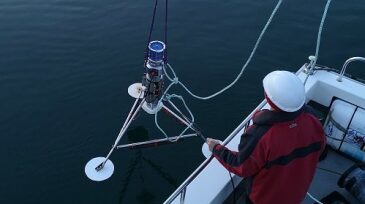
The company plans an innovative application of oceanographic instrumentation to maximize recovery at its Johan Sverdrup oil field in the North Sea.
-
Oil companies generate an enormous amount of data but are reluctant to share it. But more sharing of information may be required in the future to keep up with a rapidly changing energy landscape.
-
High-performance computing is an important piece of the puzzle for operators looking to integrate field models with surface facilities. Next-generation processors and accelerators should help build the systems needed to meet industry's growing demands, but the tools may be reaching their limits.
-
The TRITON/TRISIS/HatMan malware incident proved that the worlds of process safety and industrial control systems should be looked at holistically, not just from the standpoint of potential cyberthreats.
-
The need to understand the future trends of the oil industry has never been greater than it is today.
-
In this study, the authors investigated a fully data-driven approach using artificial neural networks (ANNs) for real-time virtual flowmetering and back-allocation in production wells.
-
The authors detail the development of a technique based on surface-to-borehole controlled-source electromagnetics (CSEM), which exploits the large contrast in resistivity between injected water and oil to derive 3D resistivity distributions, proportional to saturations, in the reservoir.
-
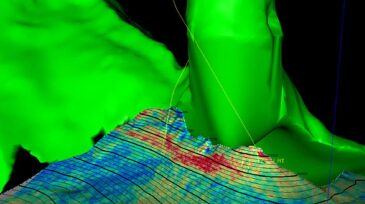
This paper discusses a project with the objective of leveraging prestack and poststack seismic data in order to reconstruct 3D images of thin, discontinuous, oil-filled packstone pay facies of the Upper and Lower Wolfcamp formation.