Data & Analytics

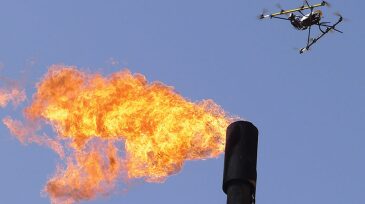
The deployment of a new heavy-duty robotic system aims to reduce workforce exposure to high-risk areas while improving detection of potential leaks.
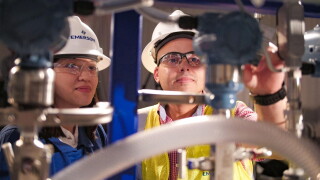
Aramco says it has saved $770 million over the past 3 years from the $70 million it has invested over the same period in corrosion management technologies.

The deal adds physics-based reservoir modeling and real-time decision workflows to SLB’s digital portfolio.
-
 For companies working to maximize production and profits, one of the biggest questions has been, and continues to be, how manyu wells to drill per square mile.
 -
Some of the world’s largest exploration and production companies say the big bets they have placed on high-performance computing over the past several years are set to pay off.
-
Robotic submarines, capable of operating by themselves thousands of feet underwater for months or perhaps years at a time, are under development as the vanguard of tomorrow’s subsea oil and gas fields.
-
Unmanned aircraft are finding their place in the oil and gas industry by providing aerial geologic modeling to address reservoir-related challenges and making inspections safer.
-
The smart-field concept is deployed through disseminating elements of tools and infrastructure integrated to bring a level of smartness that can improve the performance of an oilfield asset in a sustainable way. How this is accomplished can vary widely depending on the field.
-
Not only are individual wells challenging, but most are part of a complex reservoir network that must be managed over an extended period.
-
Statoil, operating the Troll field in the Norwegian sector of the North Sea, wished to run a deep sidetrack from the main bore in a multilateral well that would exit through the liner in the reservoir. Several zonal-isolation methods had been evaluated, but on the basis of previous experience Statoil decided to use swellable-packer technology. Testing revealed that th…
-
The steam-assisted-gravity-drainage (SAGD) process along with an efficient steam-use process can reduce production costs and increase the oil-recovery rate. The use of real-time downhole monitoring is an effective approach to achieve this optimization.
-
I recently attended an internal conference in my company where one of the major topics was unconventionals. I have followed at some distance the business and technical trends that have shaped this still-emerging opportunity set, but this was my first exposure to behind-the-scenes experiences.
-
This paper describes an all-in-one system that combines nodal-analysis and numerical-simulation models to calculate the effect of intelligent-completion components—such as swell packers, internal control valves, and inflow-control devices—on lateral production profiles.