Data & Analytics
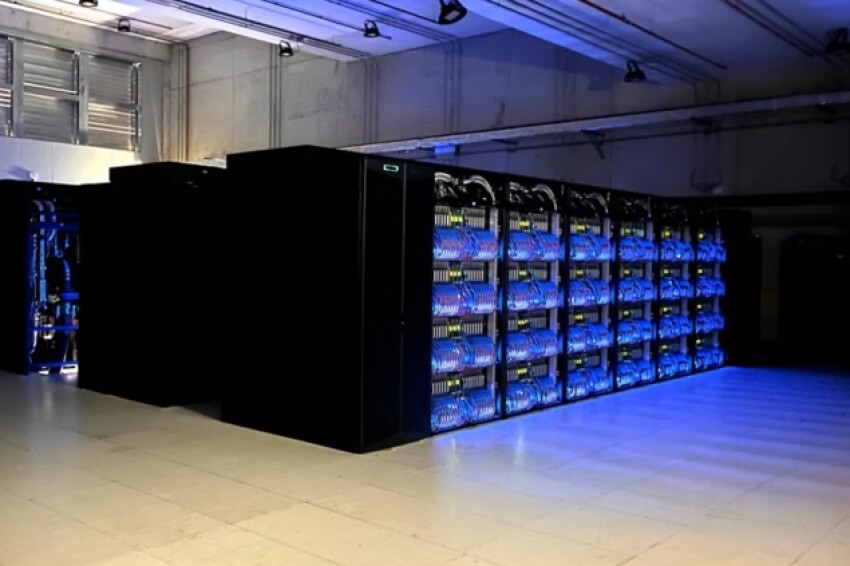
With the latest addition, the Italian major’s computational capacity passes the exaflop threshold, making the firm the world’s leading company by computing power in the new TOP500 global ranking.

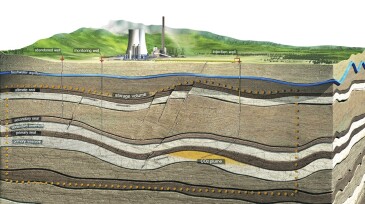
This work describes a study in which distributed data parallel training, paired with a node-local caching pipeline, enabled efficient multigraphics-processing-unit scaling for a CO₂-storage graph-neural-network surrogate while maintaining generalization.

This paper presents a novel reservoir engineering/reservoir simulation approach—a data-driven interwell-connectivity model augmented as a digital twin—to predict reservoir dynamics and optimize operations in the Changqing oil field of China.
-
 Petrolern has received a $1.15-million grant from the US Department of Energy to develop and commercialize its technology that models in-situ stresses by using available data.
 -
The market may be different from what we have previously experienced, but the path to a successful digital transformation is durable and the core principles of success have not changed.
-
Anomalies in heart function can be diagnosed in real time by measuring an electrical signal. Petroleum engineers have adapted the concept to diagnose anomalous drilling conditions in real time using a shock signature recorded downhole.
-
Oslo-based consultancy Rystad Energy sees the potential for robots and automation to replace up to 400,000 roles in North America, Europe, and Russia by 2030. The timeline is not guaranteed, though, and will move at a speed set by human decision making.
-
The company’s newest product will combine with Amazon Web Service’s efforts to ease access to data from the Open Subsurface Data Universe.
-
For oil and gas companies to remain in existence in the second half of the 21st century, they must find ways to dramatically reduce, if not eliminate, their output of carbon dioxide and other greenhouse gases. Artificial intelligence technology could provide one tool to help the energy industry accomplish that staggeringly difficult goal.
-
Scientists at the Sandia National Laboratories are using machine learning to find methane hydrates on the seafloor, using an approach similar to weather forecasting.
-
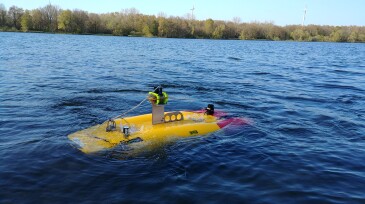
The new DeeperSense project, an international consortium led by the German Research Center for Artificial Intelligence, is working on technologies that combine the strengths of visual and acoustic sensors with the help of artificial intelligence. The aim is to significantly improve the perception of robotic underwater vehicles.
-
The infrastructure engineering software firm is expected to pay more than $1 billion to acquire geological and geophysical modeling software developer Seequent.
-
Honeywell's H1 quantum system has reached a record-high quantum volume.