Data & Analytics
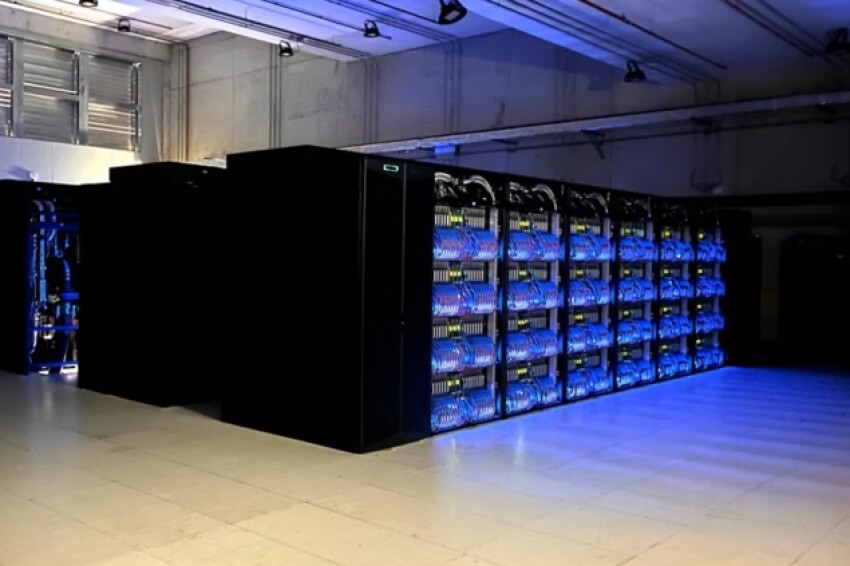
With the latest addition, the Italian major’s computational capacity passes the exaflop threshold, making the firm the world’s leading company by computing power in the new TOP500 global ranking.

This work describes a study in which distributed data parallel training, paired with a node-local caching pipeline, enabled efficient multigraphics-processing-unit scaling for a CO₂-storage graph-neural-network surrogate while maintaining generalization.

This paper presents a novel reservoir engineering/reservoir simulation approach—a data-driven interwell-connectivity model augmented as a digital twin—to predict reservoir dynamics and optimize operations in the Changqing oil field of China.
-
 How can the famous Casino-inspired trick for data science, statistics, and all of science be done in Python?
 -
Over the years, I’ve noticed interesting cultural differences between industrial sectors in their approach to dealing with staff software training. Here, I’ll try to synthesize them into a major insight and expound on the implications.
-
The complete paper uses 3,782 unconventional horizontal wells to analyze the effect of proppant volume and the length of the perforated lateral on short- and long-term well productivity across the Permian Basin.
-
In the spectrum of artificial intelligence (AI) technologies, those adopted to date in the oil and gas industry are task-focused, narrow applications. Taking AI to the next level cannot be done by Silicon Valley alone.
-
In the complete paper, the authors generate a model by using an artificial-neural-network (ANN) technique to predict both capillary pressure and relative permeability from resistivity.
-
Eni and IBM developed a cognitive engine exploiting a deep-learning approach to scan documents, searching for basin geology concepts and extracting information about petroleum system elements.
-
COVID-19 has significantly accelerated the adoption of digital technologies across all industries, and the oil and gas industry has been no exception. As such, interest in digital data acquisition, which is the backbone of all digital transformation work flows, also has increased significantly.
-
Industrial robots are becoming an increasingly popular choice in a variety of industries for different applications. Going by responses to a McKinsey and Company survey, up to 88% of businesses worldwide intend to adopt robotic automation into their infrastructure.
-
AI-driven technology in the form of digital twins is helping companies reduce costs as they reopen after the COVID-19 lockdown, says a report from research and advisory company Gartner.
-
Where there are data generated and collected, there is analysis of the data. The ongoing digital transformation in the industry has opened many opportunities for professionals skilled in data analytics.