Data & Analytics
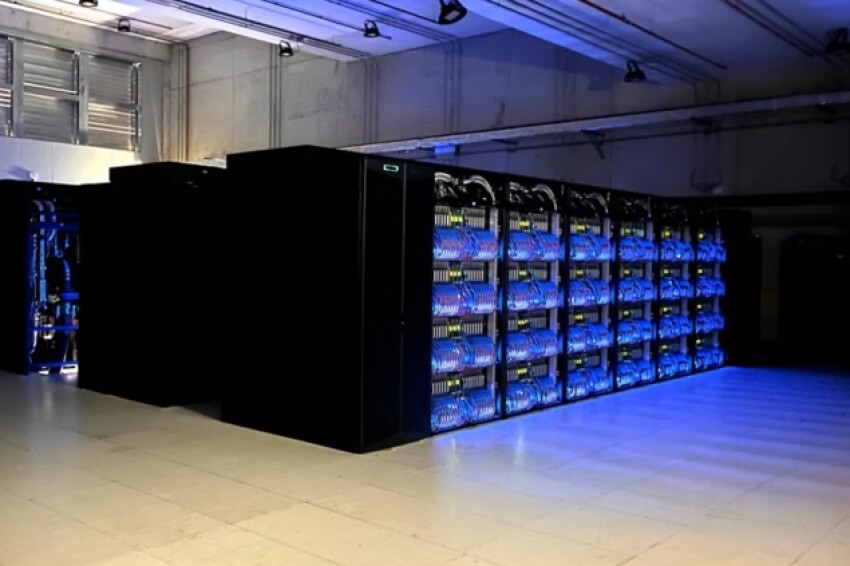
With the latest addition, the Italian major’s computational capacity passes the exaflop threshold, making the firm the world’s leading company by computing power in the new TOP500 global ranking.

This case study describes how edge computing and industrial internet of things platforms were deployed to automate and optimize production operations across four distinct basins.

This work describes a study in which distributed data parallel training, paired with a node-local caching pipeline, enabled efficient multigraphics-processing-unit scaling for a CO₂-storage graph-neural-network surrogate while maintaining generalization.
-
 The AI-driven tool will detect anomalies in subsea oil and gas infrastructure.
 -
Alan Nelson is not only the new chief technology officer at ADNOC, he is the company’s first person to hold the title at the integrated oil company.
-
Hear first-hand from the first-ever chief technology officer at the Abu Dhabi National Oil Company, Alan Nelson, about the integrated operator's digital transformation strategy.
-
Despite streams of data being available on platforms about the condition of topside and drilling equipment, most experts agree that only a small fraction of such data is used. Whether for a fleet or single platform, AI can transform an offshore enterprise.
-
An AI-based application enabled operators to preempt ESP failures while optimizing production.
-
Artificial intelligence systems can be trained to recognize visual content in drawings and provide a simplified context. The complete paper highlights the use of AI to process a scanned drawing and redrawing it on a digital platform.
-
Artificial intelligence is already part of the work done in an office near you, and, before you know it, it will be in your office as well. Gaining familiarity and an understanding of it will serve you well.
-
Time-stamped data anomalies can lead to more-accurate identification and faster diagnosis.
-
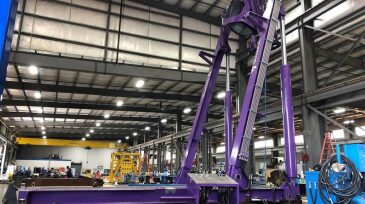
The A-frame is DNV certified. TechnipFMC’s ROVs will deploy in GoM later this year.
-
As the world’s top oil producers prepared for a weeklong meeting in April to plan a response to slumping prices of crude, espionage hackers commenced a sophisticated spearphishing campaign that was concentrated on US-based energy companies.