Data & Analytics

This research focuses on combining physics-based expert rules with machine learning to improve the detection of failure-related events in electrical submersible pumps.

A combination of physics principles and machine-learning techniques is used in this work to develop a virtual flowmeter for oil-production optimization in electrical-submersible-pump-lifted oil wells, resulting in reliable generalization.

This paper presents the deployment of an artificial intelligence-enabled autonomous gas lift optimization system, integrating real-time centralized advanced process control with cloud-based analytics to enhance artificial gas lift performance in producer wells.
-
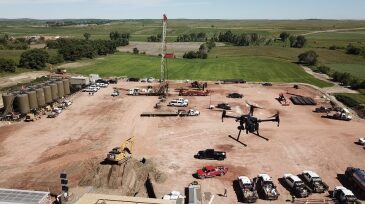
 One of the more significant benefits of drones in the field to date has been their ability to improve safety in the field.
 -
As shale plays are becoming economically viable, operators have fast-adopted best practices to optimize drilling and completion processes to drive down the lifting costs. Adoption of data-driven analytics to improve completion design, drive efficiency, and yield economic gains has been less swift.
-
Saudi Aramco and Raytheon signed a memorandum of understanding to establish a joint venture that will develop and provide cybersecurity services in Saudi Arabia and the region.
-
Subsea inspection/repair/maintenance services have traditionally relied on vessel-based, ROV, or diver operations. In the longer term, identifying significant incremental savings in these operations is not sustainable and an innovative approach deploying digital technologies is being investigated.
-
A hack on Italian oil services firm Saipem that crippled more than 300 of the company’s computers used a variant of the notorious Shamoon virus, Saipem said, a development that links the case to a massive attack in 2012 on Saudi Aramco.
-
The blockchain-based automated system pilot is expected to integrate oil and gas production, providing a platform for the tracking, validating, and execution of transactions at every stage of the project life cycle.
-
The Italian oil-services company is still assessing the scope and impact of a cyberattack that targeted its servers in the Middle East, according to the company’s head of digital and innovation.
-
Companies are bringing satellite monitoring to the unconventional oilfield—namely the Permian Basin—where they are training machine learning models to track and predict drilling and completions work.
-
The greater connectivity of the digital age and the Internet of Things has resulted in increased efficiency through big data, analytics, sensors, and the ability to automate highly sensitive tasks. However, it has also opened the doors to cyberattacks.
-
Discussions of big data and its management are increasing across our industry and disciplines. This selection of technical papers takes a look at data mining, the ethical issues associated with it, and the status of data-driven methods.