Data & Analytics

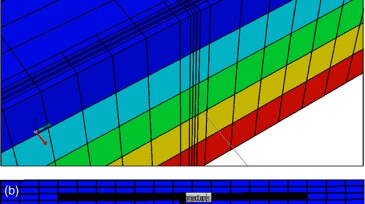
Switching from continuous circulation to cyclic huff-‘n’-puff operation in enhanced geothermal systems can significantly delay thermal breakthrough, sustain higher production temperatures, and improve long-term economic performance.

The two companies say they plan to work together to use agentic AI to increase the capabilities of technical experts.

This article is the first in a Q&A series from the SPE Methane Emissions Management Technical Section (MEMTS) on methane intelligence and how oil and gas teams translate emissions data into credible decisions and measurable reductions.
-
 Supervised learning has many commercial applications; however, such learning lacks the capability to generate new insights and knowledge. In contrast, unsupervised learning discovers the inherent structures in unlabeled data, thereby helping generate new insights and actionable knowledge from large volumes of data.
 -
Schneider Electric University has been designed to help data center professionals expand their skills by offering free guidance on the latest technology, sustainability, and energy efficiency initiatives.
-
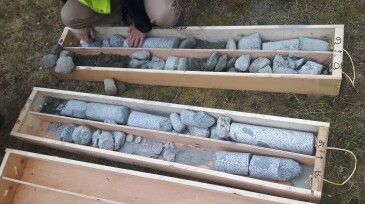
Researchers from Skoltech have trained a neural network to recognize rock samples in core box images efficiently. The process has sped up analysis by up to 20 times and made it possible to automate the description of rock samples.
-
Chief digital and information officer Sandeep Gupta's innovative use of technology has enabled the company to cut costs, reduce time to first oil, and manage decline in production.
-
HiberHilo will be used to monitor remote oil and gas wells in Papua New Guinea, providing real-time performance and safety data.
-
Companies now have 24 hours to report hacks and are poised to get more flexibility to design their defenses.
-
The paper investigates estimation of optimal design variables that maximize net present value for life-cycle production optimization during a single-well CO2 huff ‘n’ puff process in unconventional oil reservoirs.
-
The paper describes an approach to history matching and forecasting that does not require a reservoir simulation model, is data driven, and includes a physics model based on material balance.
-
This paper evaluates learnings from the past 30 years of methods that aim to quantify the uncertainty in the subsurface using multiple realizations, describing major challenges and outlining potential ways to overcome them.
-
The collaboration is planned to explore artificial intelligence in an effort to get more value from oil and gas operations and create a sustainable and carbon-efficient future for the energy industry.