Digital Oil Field

The paper presents the design and successful field deployment of the first closed-loop hydraulic fracturing program.

The authors write that by replacing outdated, labor-intensive processes with an integrated, cloud-based platform, companies can streamline planning, improve accuracy, and foster better coordination across teams and vendors.

This paper presents the first global application of autonomous drilling in deepwater and the journey to reach optimal drilling parameters, integrating proprietary tools from the project’s business partners.
-
 The complete paper evaluates optimization techniques to develop, or support, business cases for intelligent or smart wells.
 -
The most-competitive emerging systems blend artificial intelligence to bring better efficiency to the human work that results in good business decisions. As a result, we waste less time and fewer resources finding and manipulating data and focus more on complex engineering judgment.
-
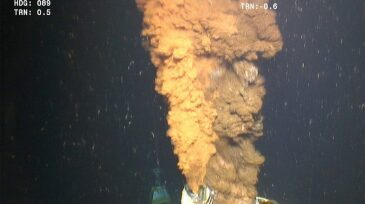
An investigator from the US National Energy Technology Laboratory examines the role remotely operated vehicles played in flow rate estimation from the Macondo well.
-
A real-time production-surveillance and -optimization system has been developed to integrate available surveillance data with the objective of driving routine production optimization.
-
This paper describes how the use of production-modeling tools, coupled with field pressure/temperature-data-acquisition systems and programming software, served as a means to improve production allocation and surveillance on a real-time basis in the Greater Angostura Field.
-
The application of high-precision downhole temperature sensors has resulted in pressure-transient analysis (PTA) being complemented or replaced by temperature-transient analysis (TTA).
-
Investment in digital technologies may increase project efficiency and reduce costs. However, Technip’s chief executive officer (CEO) said it is equally important to strengthen relationships with companies along the supply chain.
-
Visualization technology has played a key role in reducing operational expenditure (OPEX) and improving collaboration, thus maximizing uptime across the industry throughout the asset life cycle.
-
A recently released report predicted that IoT networks will not take up as much of the overall market share as previously anticipated.
-
Distributed temperature sensing (DTS) is the most common fiber-optic measurement used for steam-assisted-gravity-drainage reservoir monitoring.