Drilling automation

This edition highlights three offshore technology papers that address a common industry theme: how targeted engineering solutions can reduce uncertainty, shorten operations, and make technically constrained offshore well activities more executable.

Sponsored
With operators under pressure to deliver more energy with fewer resources, predictable drilling performance is more important than ever. Discover how a unified digital workflow can turn drilling data into better decisions and consistent execution—providing the foundation for autonomous drilling and more predictable, profitable, and productive wells at scale.

Current classifications often do not capture the complexity of autonomy in drilling systems. By integrating concepts from aerospace, control theory, and other high-risk industries, this study presents a quantitative framework for systematically assessing and comparing levels of drilling autonomy.
-
 Few oil and gas companies give data science projects the better part of a decade to prove out, but that’s just what this one did.
 -
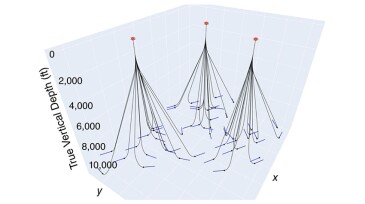
This paper presents an approach to optimize the location of wellhead towers using an algorithm based on multiple parameters related to well cost.
-
This paper describes the application of learnings from an offshore project in the Caspian to an underground gas storage project to enhance drilling performance.
-
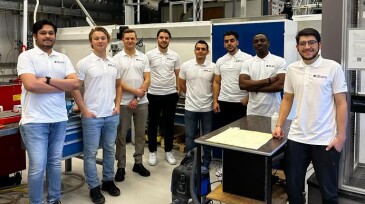
The winners of this year’s Drillbotics competition are teams from the University of Stavanger and Clausthal University of Technology. Thirteen teams registered last fall, coming from seven countries spanning four continents.
-
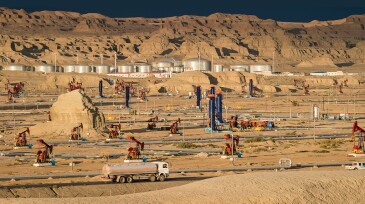
CNPC’s record-breaking 11,100-m exploration borehole in the Taklamakan Desert promises to unlock the science of producing oil and gas trapped in the world’s deepest reservoirs.
-
The duo’s new services will be initially deployed in Iraq.
-
Nabors is connecting Corva’s platform to its universal rig controls and automation platform, allowing apps built and developed in Corva to monitor and control any rig equipped with the platform.
-
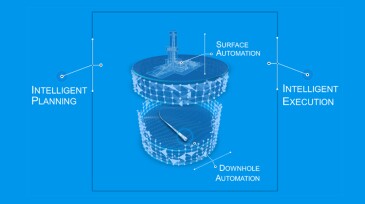
The authors of this paper present an autonomous directional-drilling framework built on intelligent planning and execution capabilities and supported by surface and downhole automation technologies.
-
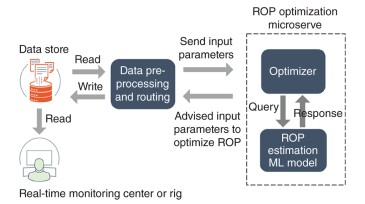
The authors of this paper discuss a global rate-of-penetration machine-learning model with the potential to eliminate learning curves and reduce time and costs associated with developing a new model for every field.
-
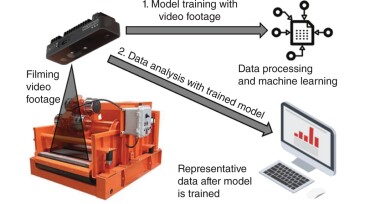
The authors of this paper describe a project that demonstrated the feasibility of using deep-learning and machine-learning approaches to introduce camera-based solids monitoring to the drilling industry.