Drilling/completion fluids

As unconventional hydraulic fracturing matures, completions practices shift from art to engineering best practices.

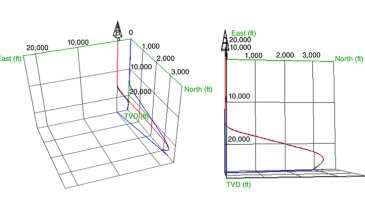
This paper establishes that the use of a dual-gradient fluid column during the running of large casing in an extreme-reach deepwater well is an effective method to overcome drag and enable the casing to reach total depth.

In this paper, a case study is described in which a software solution enabled prescriptive optimization of well delivery using a physics-informed machine-learning approach for predictive identification and characterization of well-construction risks.
-
 Typically, oil and gas producing wells are abandoned toward the end of their life cycles with reservoir pressures depleted compared with the virgin pressures. Carbon capture and storage projects, however, present different operating conditions.
 -
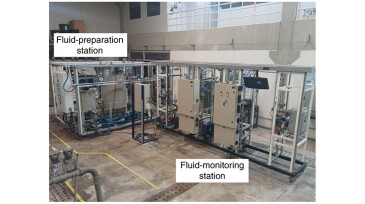
This paper presents the concept of a supervisory and advisory system dedicated to support the detection of abnormal events and to provide guidelines for fluid treatment.
-
This paper describes the success of using a new low-equivalent-circulating-density organophilic clay-free inverted emulsion fluid in gas reservoirs at elevated temperatures and with differential pressures up to 4,500 psi.
-
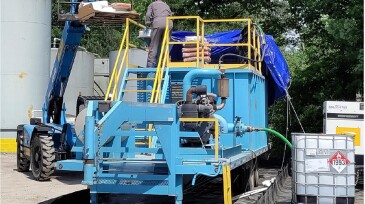
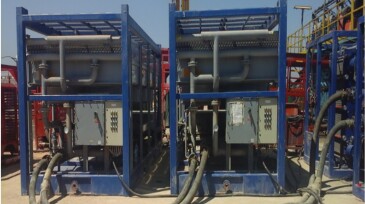
This paper describes a systematic full-scale test program to study and optimize solids-control efficiency with hollow-glass-beads drilling fluids.
-
At every stage, well-construction projects must be concerned about those aspects to establish measurable barriers for preventing issues. Therefore, drilling and completion fluids are critical for achieving project goals and ensuring operations are executed as planned.
-
This paper describes an openhole wireline-logging operation in a deepwater Gulf of Mexico well in a high-pressure/high-temperature slimhole environment using water-based reservoir drilling fluid.
-
The authors of this paper present results of a study that examined formation-damage mechanisms caused by drilling fluids in tight reservoirs in onshore oil fields in Abu Dhabi.
-
This paper reviews the successful application of a mud-cooling and managed-pressure-drilling system in a high-pressure/high-temperature well to explore the potential of a Mesozoic carbonate platform in the Nile Delta of Egypt.
-
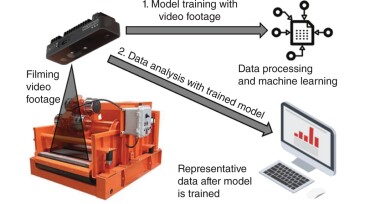
The authors of this paper describe a project that demonstrated the feasibility of using deep-learning and machine-learning approaches to introduce camera-based solids monitoring to the drilling industry.
-
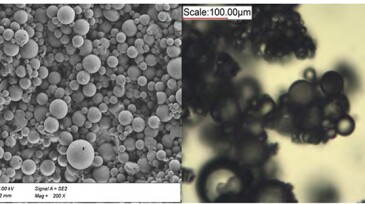
In this paper, β-cyclodextrin polymer microspheres, generally used for drug release and wastewater treatment, are evaluated as an environmentally friendly ultrahigh-temperature filtration reducer.