Drilling/completion fluids

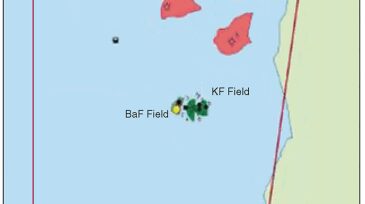
This paper discusses the successful execution of two openhole gravel-pack completions in two Gulf of Mexico fields with depleted reservoirs.

As unconventional hydraulic fracturing matures, completions practices shift from art to engineering best practices.

This paper establishes that the use of a dual-gradient fluid column during the running of large casing in an extreme-reach deepwater well is an effective method to overcome drag and enable the casing to reach total depth.
-
 Mutual understanding and respect when universities collaborate with industry is crucial. A clear policy on harmonizing innovation and higher education should be created. However, caution must be taken not to have a one-size-fits-all approach.
 -
This paper describes the first application of clay-free IEFs in the Norwegian continental shelf (NCS), with an emphasis on an impressively low and consistent ECD contribution.
-
Making hole has become a more difficult and complex operation as operators move into untapped horizons, especially deepwater and unconventional fields.
-
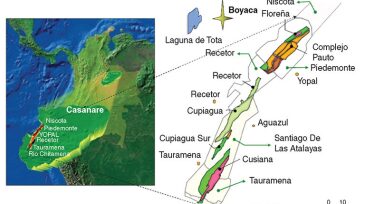
This paper describes the evaluation of a nanofluid containing nanomaterials with high adsorption capacity used for asphaltene inhibition in the volatile Cupiagua Sur oil field in Colombia.
-
Historically, invert-emulsion drilling fluids are the preferred system for drilling offshore Cameroon. However, with a regulatory environment moving toward zero discharge, associated costs are rising.
-
This year has been a great year for me; I was able to play more rounds of golf than expected! I was also successful in sealing a few research collaboration agreements within the oil and gas industry.
-
When oil-based mud is used, the drilled formation solids (cuttings) are regarded as controlled or hazardous waste.
-
A novel nonaqueous-fluid (NAF) system was designed to provide stable rheological properties with a nonprogressive gel structure and very good filtration control and filter-cake quality in wells where the expected bottomhole static temperature (BHST) exceeds 400°F.
-
A well in the South China Sea was diagnosed by ultrasonic and temperature logging to have a well-integrity problem, forcing the operator to shut in the well because the leak created a high tubing/casing-annulus pressure.
-
A novel solids-free fluid-loss pill for higher-temperature reservoirs has been formulated.