Drilling

Research by Enervus sees early 2026 permitting activity for the carbon capture and storage wells pointing to a growing approval queue, even while the rate of applications eases.

The new guidelines were released prior to reports that enhanced geothermal developer Fervo Energy experienced a blowout in Utah with no reported injuries.
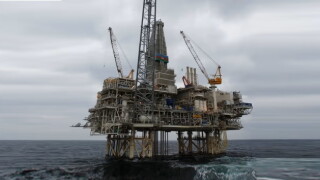
BP said it expects to keep the Azeri-Chirag-Gunashli (ACG) project in production into the 2040s by tapping into separate nonassociated gas reservoirs.
-
 This paper presents the planning and execution of a matrix-stimulation pilot project in the heavy-oil Chichimene Field in Colombia.
 -
Drilling and completion expenditure and activity is projected to show multiyear double-digit growth from 2018–2022 despite a flattening of rig count increases.
-
Phrases such as “dawn of the new age of the oil and gas industry,” and “the fourth industrial revolution” echoed through halls of SPE events in 2017 and into the new year, with rapid advancements in big data management, digital connectivity, and high-performance computing.
-
This paper details the operational effects of closed-loop drilling to demonstrate its ability to yield operational-process-safety improvements and cost savings over conventional methods.
-
This paper discusses the technical challenges related to implementing a rigsite, real-time drilling advisory system and current solutions to these challenges.
-
An operator partnered with the drilling-automation research group at The University of Texas at Austin to develop a work flow for big-data analysis and visualization. The objectives were to maximize the value derived from data, establish an analysis toolkit, and train students on data analytics.
-
Considering the significant weight of drilling costs in upstream ventures, saving even a few hours of drilling could lead to substantial cost savings on the overall capital expenditures (Capex). Thanks to the big data revolution, cost optimization still has strong potential in drilling operations.
-
Coreflooding is one of the principal tools through which we qualify drilling and completion fluids and assess the potential for formation damage, but is it relevant? By “relevant,” I mean does it give an accurate portrayal of the likely performance of the selected fluids.
-
An extensive laboratory study was carried out with two objectives: to evaluate the effect of water quality on injectivity of disposal wells with reservoir core plugs and to restore injectivity of damaged wells.
-
A reservoir-conditions coreflood study was undertaken to assist with design of drilling and completion fluids for a Norwegian field. Multiple fluids were tested, and the lowest permeability alterations did not correlate with the lowest drilling-fluid-filtrate-loss volumes.