

Energy transition

This paper presents a flexible, highly cost- and energy-efficient method of gas separation and CO₂ capture from many different gas mixtures with a large range of CO₂ concentrations.

This study explores the carbon-capture and mineralization potential of ultramafic rock powders when exposed to flue gases generated from combustion of crude oil and mesquite-derived charcoal.

This paper introduces channel stacking, a novel and efficient methodology designed to significantly improve optical gas imaging-based leak detection.
-
 After years of market shocks, technological breakthroughs, and rising uncertainty, ATCE 2026 will provide new insights on how industry leaders and technical experts are preparing for the next era of the upstream business.
 -
This guest editorial examines why geothermal projects require a different planning, financing, and development approach than traditional oil and gas projects.
-
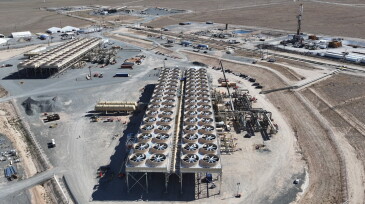
The Houston-based energy company's first generating unit has begun producing electricity as it works toward a buildout that could eventually power nearly 1 million US homes.
-
With funding opportunities improving, developers and researchers are focused on shortening project learning cycles and reducing uncertainty to attract more capital and speed deployment.
-
The US Department of Energy has awarded more than $99 million to 21 projects that will advance geothermal development through field-scale testing of next-generation technologies and exploration drilling programs across the US.
-
Considering three different climate pathways, the analysis says holding global temperature rise to 2°C by the end of the century remains possible, though increasingly challenging.
-
The shale revolution, the Paris Agreement, and the global pandemic each transformed energy markets. Now, industry leaders say energy pragmatism is emerging.
-
More than a dozen companies have joined the advisory board of a new US Department of Energy center dedicated to expanding geothermal energy in the US.
-
The startup company’s Midland Basin demonstration plant, located in the Permian Basin, takes a major step toward commercialization by proving its direct lithium extraction technology can refine battery-grade lithium carbonate from produced water under multiple 24/7 production cycles.
-
The power-purchase agreement (PPA) marks largest enhanced geothermal PPA and is expected to accelerate the delivery of continuous, carbon-free power from the Cape Station GeoCluster in Utah.







Page 1 of 56