Energy transition

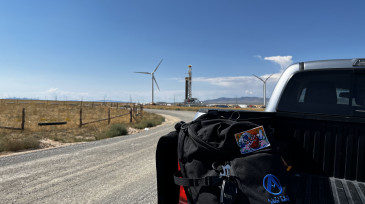
The new guidelines were released prior to reports that enhanced geothermal developer Fervo Energy experienced a blowout in Utah with no reported injuries.

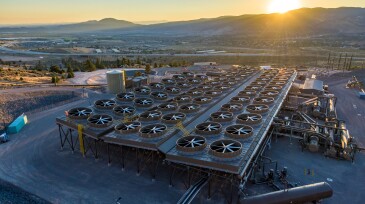
Utah, Colorado, Arizona, and New Mexico have formed the Mountain West Geothermal Consortium to turn geothermal energy into gigawatts of baseload power.

This paper presents a case study of oriented tubing-conveyed perforation followed by an acidizing operation to overcome technical challenges posed by a depleted reservoir targeted for a carbon capture, utilization, and storage project.
-
 DNV’s carbon capture and storage outlook forecasts a massive shortfall in the projects necessary to help the world reach net-zero emissions by 2050.
 -
The Dutch marine contractor says it plans to outfit its construction vessels with small modular reactors over 5 years.
-
The emergency permitting rules aim to accelerate geothermal energy development. Ormat Technologies' three Nevada projects will be the first to benefit from the streamlined process, with environmental reviews cut from years to weeks.
-
SponsoredAltitude Energy Partners optimized drilling efficiency by minimizing dysfunctions and protecting downhole components. Their directional drilling team ensured consistent curves and laterals through precise BHA design, modeling, and trajectory control—reducing nonproductive time and drilling costs, and achieving a 100% improvement in efficiency by pad completion.
-
The times are changing and so are our industry’s prospects, as hydrocarbons are now recognized as cardinal to affordable energy security for the conceivable future. But, in avoidance of suspense, the answer to the headline question is “absolutely.” Here we look at the rationale why.
-
EVP Giulia Chierchia and Chairman Helge Lund are stepping down amidst difficult Q1.
-
This paper presents an immersive platform that enables multidisciplinary teams and management to make decisions, connecting professionals to demonstrate and share findings in a way that capitalizes on artificial intelligence and cognitive capabilities.
-
The CEO and North America research director for Rystad Energy shares insights from a 3-year Knowledge Partnership between the global consultancy and OTC.
-
Young Professionals Leading the Energy Transition: Insights From SPE’s Beyond the Borders InitiativeIn March, 27 young professionals representing 15 SPE sections and 12 countries convened in Paris for the first edition of SPE Beyond the Borders 2025. The event served as a unique platform for cross-cultural dialogue and forward-looking discussions about the role of YPs in the energy transition.
-
The UK North Sea Transition Authority has awarded the required permits for the East Irish Sea project, and the project has reached financial close. The carbon capture and storage project is expected to receive its first carbon dioxide in 2028.