Flow assurance

This paper details the importance and value derived from a real-time process-twin model for one of the world’s largest operating carbon dioxide sequestration projects.

This paper presents a comprehensive analysis of autonomous scale-management strategies implemented in the Buzios Field that eliminate the need for a well-service stimulation vessel by using existing facilities onboard the well rig.

This study demonstrates the transformative potential of physics-informed neural networks as a hybrid framework for multiphase flow measurement.
-
 This paper reviews innovations and technologies used to make the Atlanta field in the Santos Basin a successful case of heavy-oil production in ultradeep water.
-
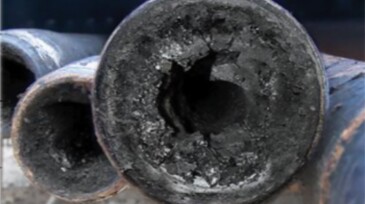
This paper describes strategies for mitigating asphaltene deposition using fiberglass-lined production tubing and the successful trials thereof.
-
This paper describes the key flow-assurance challenges for a deepwater gasfield development in the South China Sea and the considerations and steps taken to achieve an overall flow-assurance-management strategy.
-
Innovative elements of digitalization and automation of workflows provide a new approach for better handling of slugging in subsea developments with long tiebacks, potentially optimizing production and limiting the amount of flaring.
-
The complete paper presents a set of two- and three-phase slug-flow experiments conducted in a 766-m-long, 8-in. pipe at 45-bara pressure.
-
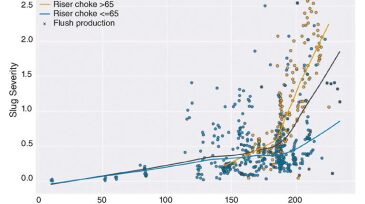
The complete paper discusses the successful application of a data-driven approach to analyze production data and identify root causes of slugging in a subsea production system on the Norwegian Continental Shelf.
-
The recurring long-term mitigation of slugging and various flow-assurance phenomena are challenging issues that demand attention and considerable technical effort. The three papers outlined here discuss slightly different issues and approaches to slug-flow phenomena and flow assurance.
-
The complete paper develops a plausible physical model of the experimentally observed pseudoslug liquid-holdup phenomenon and models physical and hydrodynamic behavior using a dimensional regression modeling approach.
-
The paper describes options for hydrate and integrity management and the required modifications to both subsea and topside facilities to enable an operational philosophy change.
-
A multizone water-injection project has ultimately proved a method of using intelligent completion interval-control valves in place of traditional sand-control completions in soft sand reservoirs.