Fracturing/pressure pumping

The Seismos full-scale research center opens to industry, universities, and national laboratories, advancing acoustic sensing across upstream energy, pipelines, critical infrastructure, and national security.

This article from the SPE Research and Development Technical Section offers new insights to how the upstream industry can benefit from the emergence of quantum computing.

This contributed article highlights the growing importance of fiber-optic sensing and its potential to advance thanks to emerging quantum technologies.
-
 You have probably heard that the Eskimo language has several dozen words for “snow,” a frequently repeated and well-known idea. It is untrue. A meme is a snippet of culture that is learned by imitation and passed on by imitation or repetition.
 -
The United States’ liquids-rich shale experience has been dominated by three major plays: the Eagle Ford Shale in south Texas, the Permian Basin in west Texas, and the Bakken Shale that straddles North Dakota and Montana.
-
The ultimate performance of fractured wells in tight reservoirs is affected severely by the interfering effects inside the fracture and interfractures.
-
Drilling long horizontal wellbores and completing wells with multistage fracturing are common practices in shale-play development.
-
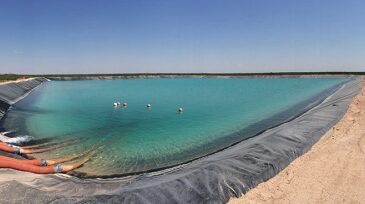
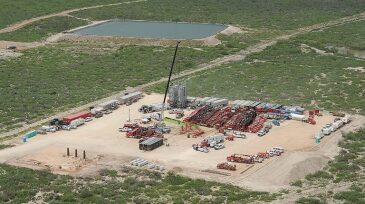
Companies are deploying a variety of technologies to reduce the water needs of hydraulic fracturing. Where are these new facilities with these new technologies, and how will they help operators solve the problem of finding water to use?
-
Over the next few years, water treatment technologies are expected to continue to be deployed in the basin, as drought drives aquifer levels to new lows.
-
Hydraulically fracturing and stimulating multiple horizontal wells in sequence has been rapidly adopted by operators because of the potential for production without introducing unwanted risks.
-
While storage and logistics are critical elements of the viability of water reuse, if the water chemistry is not fit for gel fracturing formulations, it will not matter how much is stored in centrally located impoundments.
-
Evenly fracturing all clusters in heterogeneous zones is challenging in long horizontal sections penetrating heterogeneous reservoirs, as is often the case in the Eagle Ford shale.
-
This paper attempts to describe some of the common problems and to help prevent some common errors often observed in diagnostic fracture injection tests (DFITs) execution and analysis.