Fracturing/pressure pumping

This article from the SPE Research and Development Technical Section offers new insights to how the upstream industry can benefit from the emergence of quantum computing.

This contributed article highlights the growing importance of fiber-optic sensing and its potential to advance thanks to emerging quantum technologies.

This case study presents the first field deployment of acoustic fracturing analysis to evaluate perforation efficiency and implement real-time interventions during pressure pumping.
-
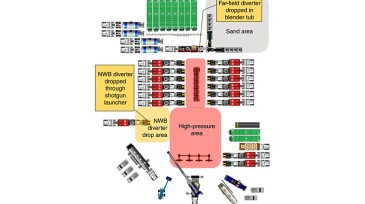
 The authors of this paper describe a project in which far-field diverters were pumped to mitigate wellbore sanding and production loss in existing parent wells.
 -
Years in the making, the program sponsored by the US Department of Energy is celebrating its latest geothermal energy breakthrough in southwestern Utah.
-
Operators are turning the tide on the Lower Tertiary trend with increasingly large stimulations that are also pushing the limits of offshore technology.
-
Matthew Bryant has spent years trying to convince engineers that the API proppant testing standard has significant limitations. And he may well be right.
-
The Midland-based service company operates a fleet that is now 65% either dual-fuel or electric-powered.
-
The second major deal in the US proppant industry this year will see US Silica go forward as a private company.
-
This paper explains how an operator’s projects in the Vaca Muerta have become more-efficient and cost-effective by increasing production and reducing well-delivery-cycle time while fostering the long-term sustainability of the project.
-
Despite tens of thousands of potential candidates and the proven upsides, the unconventional industry has largely overlooked refracturing—possibly due to the way it’s discussed.
-
The tie between US crude output and key indicators such as rig counts and the number of new wells has significantly weakened.
-
High-pressure/high-temperature (HP/HT) resources continue to be a focus of efforts to apply new technologies that maximize productivity while addressing concerns related to capital expenditure, operating expenses, and high drilling costs. These cost-effective technologies will only grow in importance in exploiting HP/HT and ultra-HP/HT fields.