Fracturing/pressure pumping

The Seismos full-scale research center opens to industry, universities, and national laboratories, advancing acoustic sensing across upstream energy, pipelines, critical infrastructure, and national security.

This article from the SPE Research and Development Technical Section offers new insights to how the upstream industry can benefit from the emergence of quantum computing.

This contributed article highlights the growing importance of fiber-optic sensing and its potential to advance thanks to emerging quantum technologies.
-
 Recent studies have reignited the question of whether US oil and gas companies are ignoring the opportunity to refracture large swaths of maturing assets.
 -
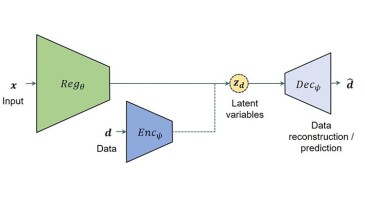
The authors discuss the development of a deep-learning model to identify errors in simulation-based performance prediction in unconventional reservoirs.
-
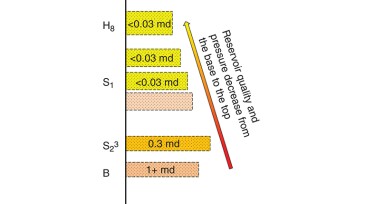
The authors of this paper compare case studies from the Bakken and the STACK plays to conclude that mineralogy, petrophysics, and reservoir-condition differences between basins cause differences in the effect of fracture-driven interactions.
-
Hydraulic fracture stimulation is proven to be the economic way to develop tight unconventional reservoirs. From an operational perspective, hydraulic stimulation is well established and widely applied to most unconventional plays. There is still room for improvement, however, to increase the efficiency and deepen the understanding of the detailed mechanism in the pro…
-
When Occidental Resources switched to bigger fracture designs to produce more oil, it produced more water as well. Based on research done since, they cannot have one without the other, and at the oil prices recently seen, that’s OK.
-
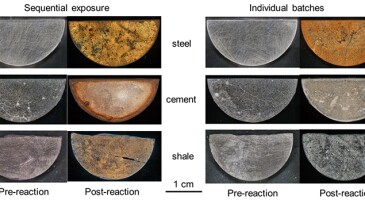
The authors of this paper demonstrate that future produced-water management and scale-mineral control may need to consider the sequential exposure effect of steel, cement, and shale on fluid chemistry and mineral precipitation.
-
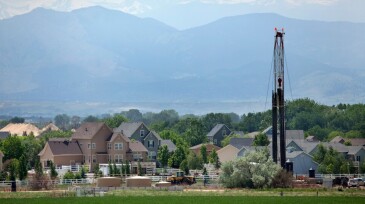
Pennsylvania children living near unconventional oil and gas developments at birth were two to three times more likely to be diagnosed with leukemia between the ages of 2 and 7 than those who did not live near this oil and gas activity, after accounting for other factors that could influence cancer risk, a novel study from the Yale School of Public Health finds.
-
Devon, Shell, and SM Energy offer some of their latest learnings from recent independent subsurface diagnostics projects. Their work underscores why this arena of technology has become a cornerstone for hydraulic-fracture design in tight-rock reservoirs.
-
This paper describes a new intelligent dosing technology to reduce liquid loading in an unconventional tight gas reservoir.
-
The key element of hydraulic-fracture modeling is the prediction of the generated fracture geometries. Research conducted over the years has trickled down predictive software. Nevertheless, the ability to design optimal fracture treatments is hampered, as we cannot “see” the subsurface.