Fracturing/pressure pumping

Industry experts at URTeC assessed more than a decade of unconventional growth while discussing where productivity gains will come from next.

Chevron and Halliburton describe how they built and deployed the fully autonomous closed-loop fracturing system that enables subsurface-driven optimization.

The paper presents the design and successful field deployment of the first closed-loop hydraulic fracturing program.
-
 Producers in Texas have claimed an economic victory with their transition to local sands that they once avoided using in horizontal wells due to their low-quality.
 -
Vaca Muerta production is on the upswing. Will increasing activity propel the Argentine play to the ranks of US shale? Data suggest it is both already there and has a ways to go.
-
Production and proved reserves in the Permian Basin’s Wolfcamp Shale and Bone Spring Formation are reaching new heights, and a new assessment from the US Geological Survey indicates the industry is just scratching the subsurface when it comes to what may be technically recoverable.
-
If the shale sector’s most complex problem can be solved, it will require companies to use their wells as a team. Newly detailed field work shows that a good defense is the key to success.
-
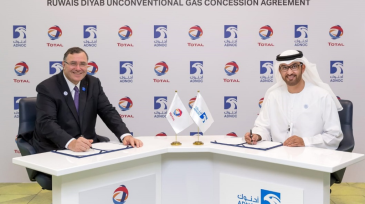
The French major will become operator of the Ruwais Diyab concession, and ADNOC says additional companies are lining up to partner on the emirate’s other unconventional areas.
-
The upcoming event will provide the shale sector with a venue to share new learnings and approaches meant to overcome one of its greatest subsurface challenges.
-
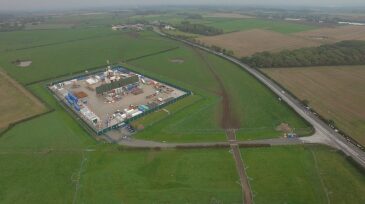
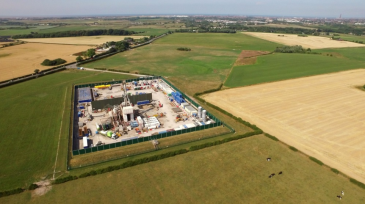
Small quantities of gas and water are flowing to the surface from the UK’s first horizontal shale well—just days after operator Cuadrilla paused injection work for a second time amid earthquakes.
-
BHGE is developing an analytics and machine-learning approach that offers descriptive and predictive insights on frac hits, with the aim of eventually offering a real-time monitoring capability to be deployed during frac jobs.
-
The SPE Liquids-Rich Basin Conference in Midland, Texas, merged topics that have dominated recent industry discussions: technologies centered on big data, interwell communication, and Permian Basin production.
-
Cuadrilla has encountered its first bumps in the road while fracturing its Preston New Road shale gas well, with two quakes already temporarily halting injection operations.