HSE & Sustainability

The 2025 report confirms for the second year that the Appalachian Basin has the lowest methane intensity of any major oil and gas basin in the US.

The North Sea Transition Authority has advanced the UK’s plans for carbon storage by approving the drilling of a proposed appraisal well off the coast of Teesside.

Smart Seismic Solutions plans to use 50,000 nodes to examine storage potential for the Greenstore CCS project.
-
 2025 has seen an 81% year-on-year rise in the number of small modular reactor designs to have secured at least one source of funding or a funding commitment.
 -
This article is the fifth in a Q&A series from the SPE Research and Development Technical Section focusing on emerging energy technologies. In this edition, Shantanu Agarwal, founder and CEO of Mati Carbon, discusses how the company’s approach to carbon removal led to winning the Musk Foundation’s XPRIZE in 2025.
-
The report from the Oil and Gas Climate Initiative presents data showing that its 12 member companies have reduced aggregate upstream methane intensity by 62%, routine flaring by 72%, and carbon intensity by 24% since 2017.
-
A newly formed global coalition, Carbon Measures, aims to develop a ledger-based carbon accounting framework and champion market-based solutions to drive emissions reduction.
-
Absolute greenhouse-gas emissions from Canadian oil sands increased by less than 1% in 2024, even as production grew, according to an analysis by S&P Global Commodity Insights, which cited gains in efficiency for the trend.
-
Satellite data show nearly 45,000 methane plumes worldwide in the first quarter, triple the number from a year earlier.
-
The publication highlights the role of carbon capture and storage (CCS) in the energy transition and how the oil and gas industry can support the uptake of CCS technologies and presents case studies from Ipieca members.
-
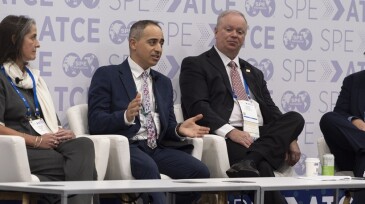
A resilience-based approach to safety was the focus of a panel of experts at the 2025 SPE Annual Technical Conference and Exhibition in Houston.
-
APOGCE 2025 set the stage for strategic dialogues on how Asia Pacific’s upstream industry can innovate, invest, and collaborate to meet growing energy demand while advancing net-zero goals.
-
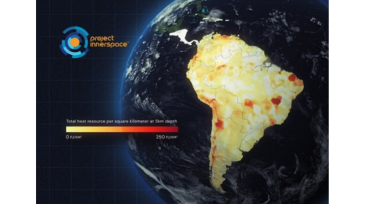
The freely accessible online platform is the latest in a series of maps designed to reveal the continent’s untapped geothermal potential.