Oilfield chemistry

The transition away from materials that contain per- and polyfluoroalkyl substances (PFAS), co-called forever chemicals, creates an opportunity to preserve historical information. Information that appears to have little operational value today may later become important when organizations need to evaluate past PFAS use. Once that information is lost, recreating it may…

This paper presents the application of degradable particulate-diverter technology to improve oil production by effectively diverting stimulation treatment fluids away from high-water-cut, high-permeability, high-temperature producing intervals or zones.

This paper presents the methodology for developing drill-in organophilic clay-free invert-emulsion-fluid technology that enhances well production through fundamental geological studies and fluid testing.
-
 Mixing dry polymer powder and water to make friction reducer as needed during fracturing can cut the cost of the additive and the testing of whether a drastically simplified recipe performs as well as more-complex mixes.
-
Friction reducers play multiple critical roles in fracturing. A challenge in selecting the best one for the job is the growing evidence that performance varies, but objective performance measurements are lacking.
-
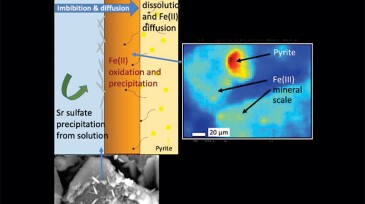
A review of the properties of iron compounds and their impact in shale produced water treatment with an emphasis on their colloidal forms. A wide range of problems is associated with these compounds in produced water including emulsion stabilization, oil-coated solids, pad formation in separators, pipeline solids, and plugging of water disposal formations.
-
The obsession with better hydraulic fracturing has steadily pushed on shale production in year one, but the decline remains steep. Chemistry could help explain, and perhaps extend, the short productive life of these wells.
-
This paper discusses the field implementation of a downhole chemical methodology that has positively affected overall productivity for a mature Kuwait field.
-
The outcome of the authors’ experiments revealed that the tertiary injection of nanoparticles results in additional oil recovery beyond the limit of low-salinity water.
-
SponsoredBefore you pump materials down your well, be sure you fully understand the effectiveness of your friction reducers and gas migration slurries.
-
This paper examines the corrosion-inhibiting properties of several edible stems at downhole conditions with high concentrations of hydrochloric acid. The objective is to present an alternative variety of corrosion inhibitors that are environmentally friendly and nontoxic.
-
The application of an extended-release scale-inhibitor in approximately 70 vertical conventional wells in the Permian Basin has shown approximately three times better performance compared to the incumbent chemical.
-
This latest project will build on a previous initiative with up to a trio of field trials aimed at supporting regulatory authorities and industry to establish new standards and practices for the use of online oil-in-water analyzers at remote locations.