Onshore/Offshore Facilities

The deal includes Waygate’s inspection portfolios and is expected to close later this year.

While Uzbekistan has seen a significant drop in flaring, methane leaks from deteriorating infrastructure continue to reveal themselves to satellites in space.

Analysts weigh near‑term risks for Middle East oil and gas producers after a tentative 2‑week ceasefire between the US‑Israeli coalition and Iran.
-
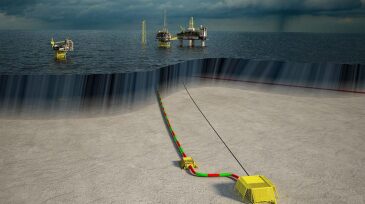
 Obstacles remain to keeping offshore development competitive with its onshore counterpart. Can the industry advance technology at a pace where the subsea segment will see a resurgence?
 -
Southwest Research Institute has developed a leak detection system to autonomously monitor pipelines for hazardous chemical spills. R&D Magazine recently recognized the system as one of the 100 most significant innovations of 2017.
-
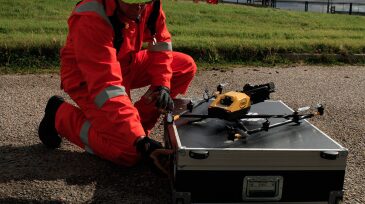
Intel and Cyberhawk released a case study outlining the successful inspection of a gas terminal near the coast of Scotland using commercially available drone technology.
-
Shell reported it has not observed any signs of oil on the water associated with a fire on the Enchilada platform, located in the US Gulf of Mexico.
-
GATE Energy is the most recent contract awardee for Noble Energy’s Leviathan project offshore Israel. It will provide the commissioning of the production platform for the megaproject.
-
Total is making an LNG push by spending up to $2 billion for assets belonging to fellow French firm Engie.
-
Since the Macondo disaster, industry publications have discussed the equipment, connections, and interfaces needed for capping and containing a blowing subsea well, but they give little insight into developing a well-specific subsea capping contingency plan.
-
In this study, the effects of the hydrodynamic parameters are decoupled with specially designed flow-loop experiments. The results enhance understanding of the deposition behavior at various hydrodynamic conditions and aid in scaling up from laboratory to field conditions.
-
Mitigation of flow-assurance problems continues to drive new production-technology applications and approaches. The three papers highlighted here focus on minimizing costs while providing safe, effective, and reliable operations.
-
In this study, two coatings were produced and evaluated to determine their effect on hydrate adhesion onto carbon-steel surfaces.