Onshore/Offshore Facilities

Sulzer and JSIL are teaming up to provide the service for oil and gas, power generation, and industrial operations.

The deal includes Waygate’s inspection portfolios and is expected to close later this year.

While Uzbekistan has seen a significant drop in flaring, methane leaks from deteriorating infrastructure continue to reveal themselves to satellites in space.
-
 At the 2016 Gulf of Mexico Deepwater Technical Symposium in New Orleans, a presentation discussed the application of sensors and analytics in pipeline integrity management systems.
 -
The Dakota Access Pipeline, which will connect the Bakken and Three Forks production areas, has received the regulatory go-ahead from the US Army Corps of Engineers.
-
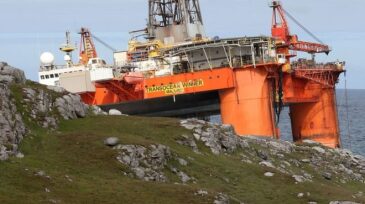
Eight salvage experts have boarded the Transocean Winner, which ran agorund off the Isle of Lewis on 8 August.
-
Douglas Westwoods' world FLNG market forecast for the period 2016-2022. A stormy ride is expected for the LNG industry, as the fall in natural gas prices limits investment in capital-intensive liquefaction projects.
-
This paper presents a state-of-the-art review of scale-inhibitor-analysis techniques and describes how these techniques can be used to provide cost-effective scale management.
-
Successful rejuvenation of two declining fields was enabled through innovation in both engineering and procurement strategy.
-
The deepwater industry uses technology qualification (TQ) as a tool to determine which safety barriers are needed, and what level of testing is required. Even without failure data from the field, a method has been developed to quantify the integrity of various components.
-
Intervention and workover operations can significantly affect the structural integrity and fatigue life of subsea-wellhead systems. Methodologies for wellhead-fatigue analysis have improved, but have yet to account for thermal effects along the well. This study analyzes those thermal effects.
-
The sharp downturn in the offshore oil business has sparked interest in using subsea pumps to add production. If those conversations turn into orders, it may convert this rarely used option into a commonly used tool for extending the life of offshore fields.
-
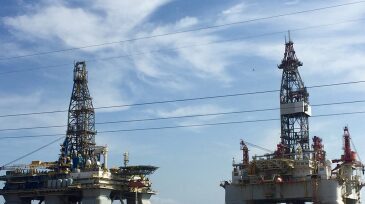
The Noble Jim Day semisubmersible (left) arrived at Harbor Island in Port Aransas, Texas, on 29 July to be cold stacked.