Onshore/Offshore Facilities

War‑related infrastructure damage is beginning to influence global energy supply chains in ways that could reshape project development and capacity growth.
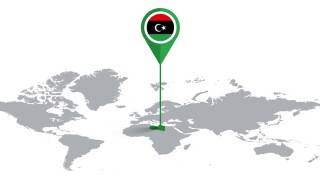
Sulzer and JSIL are teaming up to provide the service for oil and gas, power generation, and industrial operations.

The deal includes Waygate’s inspection portfolios and is expected to close later this year.
-
 A new methodology for oil/water horizontal pipe separator (HPS) design and performance prediction is developed. Separator diameter is determined on the basis of oil/water flow-pattern prediction. A batch separator model is adopted and modified to predict the separator length for desired quality.
 -
Pipelines play a vital supporting role in the energy supply chain as one of the most efficient modes of hydrocarbon transportation. Unconventional resource development and LNG have set the stage for growth in onshore pipelines.
-
Paradoxical effects can exist when expanding the capacity of natural-gas-transportation networks. This paper derives conditions where it can be expected, how the effect can be masked, and provide analysis to support identification in larger-scale networks.
-
Setting optimal surface separation pressures are crucial for maximizing the surface liquid production from the wellstream feed. Where separator tests are not available, empirical calculations are often used, but with limitations. A method suitable across many conditions is proposed.
-
In 2013, as deepwater projects become increasingly capital intensive, there are economic challenges for exploration and production (E&P) companies and a potential prize for international oilfield service and equipment vendors. Deepwater represents a long-term opportunity.
-
Separations technology-related content has been expanded and made available to SPE members through the efforts of the Separations Technology Technical Section.
-
The Hadrian-5 prospect in the US Gulf of Mexico was drilled in approximately 7,000 ft of water as one of the first Gulf of Mexico wells drilled after a deepwater moratorium was imposed after the Macondo disaster.
-
Riser margins were abandoned when fluid columns in risers became too long with increasing water depth accessed when floating drilling units with subsea blowout preventers (BOPs) moved to deep water.
-
Kuwait Oil Company started free gas production from its Jurassic sour-gas field in May 2008 with the commissioning of Early Production Facility (EPF) 50.
-
Monetizing offshore gas by compressing and shipping it in floating compressed-natural-gas (FCNG) carriers is simpler and, in most cases, less expensive than liquefying and shipping it in floating liquefied-natural-gas (FLNG) carriers.