Onshore/Offshore Facilities

Equinor and its partners’ investment in the Troll West Increased Gas Recovery North (TWIN) project aims to unlock around 11 Bcm of additional natural gas from the Troll field, with first production targeted as early as 2028.

The US supermajor will use Permian Basin natural gas to support the hyperscaler’s AI business.

The Coral Norte FLNG is to be the mirror image of the Coral Sul unit, which shipped its first cargo in 2022 after it was put into service in Area 4 offshore Mozambique.
-
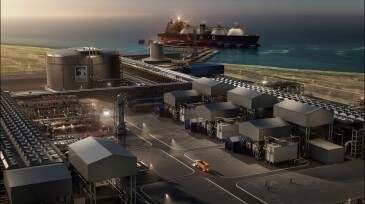
 Ruwais is slated to be the first net-zero LNG facility in the Middle East and North Africa.
 -
The new wells at Zohr are key to a plan to return Egypt’s gas production back to “pre-crisis” levels by June 2025.
-
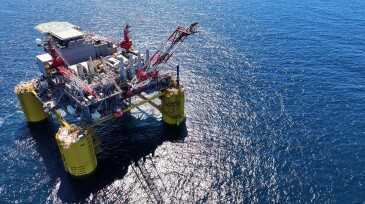
At peak, 100,000 BOE/D is expected to flow to the Whale production semisumbersible, which largely replicates the Vito semi.
-
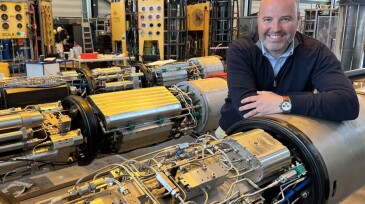
The acquisition, expected to close in early 2025, will bring Optime Subsea’s umbilical-less technology into Halliburton’s Testing and Subsea division.
-
As Southeast Asia’s third-largest gas producer, PTTEP is investing in its energy security by prioritizing gas production and building up a global LNG supply chain.
-
After overcoming the challenges of a new offshore frontier, BP has begun first gas flow at its ultradeep project offshore Mauritania and Senegal.
-
The first two wells at Brava Energia’s Atlanta field are producing, with four more to be connected this year.
-
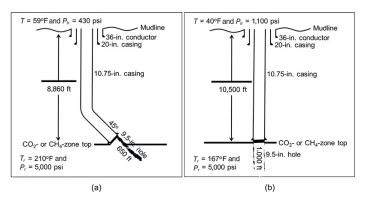
In this paper, a dynamic multiphase-flow simulator is used to evaluate the effectiveness and suitability of using a subsea capping stack to respond to a CO₂ well blowout.
-
The objective of this paper is to outline the importance of new standards for studying hydraulic sealability of barrier materials, with an emphasis on interface analysis.
-
The authors of this paper describe how deployment of dual-casing cement-bond-logging technology has provided critical insights in real time for decision-making on remedial jobs.