Onshore/Offshore Facilities

This paper documents the testing, integration, and field deployment of a metal expandable packer used as an openhole toe isolation plug in a deepwater well under high-pressure, high-temperature conditions.

This paper presents an approach for safe, efficient, and cost-effective legacy well reabandonment.

This paper introduces channel stacking, a novel and efficient methodology designed to significantly improve optical gas imaging-based leak detection.
-
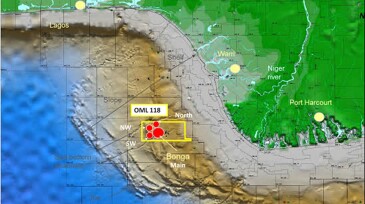
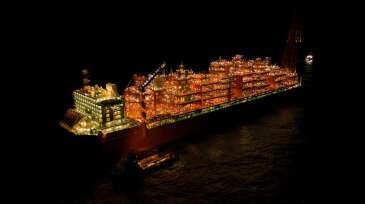
 This paper discusses the journey of the Bonga North project, highlighting challenges and resolution strategies in a constantly changing deepwater environment.
 -
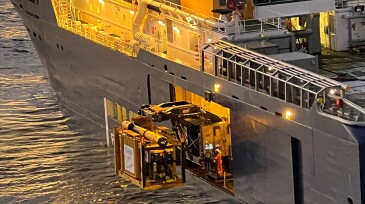
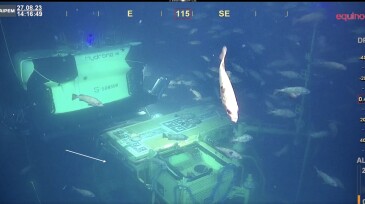
With the right infrastructure and interoperability, subsea resident robotics could unlock more frequent, cost-effective inspections—and a new standard for offshore efficiency.
-
Emerging solutions could solve current subsea pain points, while a new taxonomy system could clarify the capabilities of the expanding domain of underwater vehicles.
-
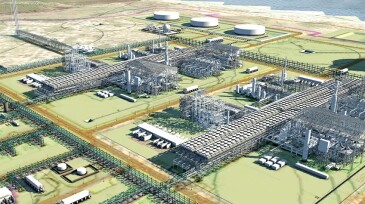
As LNG projects sanctioned earlier this decade come onstream, a shortage of new final and pre-final investment decisions threatens to leave the project pipelines dry at a time when global LNG demand is forecast to surge over the next 15 years.
-
Rystad Energy reports that developers are increasingly turning to floating LNG to reduce costs and accelerate project timelines in response to growing gas demand.
-
Almost all rigs, platforms, and vessels have some form of cellular mobile services, fiber, or even microwave transmission. Nevertheless, all these vessels and assets are equipped with satellite connectivity capabilities.
-
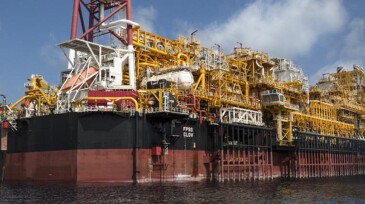
The Begonia and CLOV Phase 3 subsea tiebacks are each sending production to nearby FPSOs.
-
The China National Offshore Oil Corporation said it plans to use water injection, steam huff ’n’ puff, and steamflooding to produce the heavy oil field, with peak production expected in 2026.
-
With the right internal modifications, traditional degassers can be enhanced with gas flotation for improved oily water separation. This article outlines key design considerations—including inlet and settling zones, skimming, and solids handling. Two case studies highlight lessons learned in troubleshooting and revamping degasser designs.
-
Work by researchers at the University of Saskatchewan aims to advance the understanding of clathrate hydrates, crystal cages of ice that can trap gas and liquids.