Production

Production has begun at the company’s fifth FPSO-based development offshore Guyana just days after it sanctioned what will become its eighth project in the prolific Stabroek Block.

Chevron, ExxonMobil, BP, and TotalEnergies are all back in Iraq as the country boosts its oil production target to10 million B/D within 6 years and seeks new pipeline export routes via Turkey and Syria to reduce reliance on the Strait of Hormuz.

The loan to Arena Energy will generate an estimated 38,600 B/D in new production from 22 platforms in the Gulf.
-
 The featured papers and suggested further reading summarize the current SPE literature state of the art for H2S scavenger research and development and have been selected to give readers a broad indication from both academia and industry around the world.
-
This paper describes studies that confirm that enzyme-based, environmentally preferable chemistries can be used to break polymers and mitigate H2S in various systems.
-
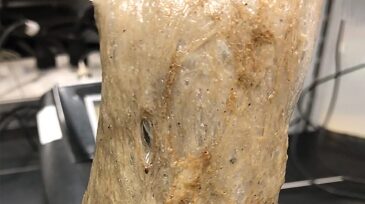
The source of gummy, damaging polymer gunk that has flowed from Oklahoma oil wells is becoming clear, and one of the lessons learned is that shale plays require petroleum engineers to learn more about chemistry.
-
Based on the early results from mass shut-ins of shale wells, it did not harm long-term production and it paid a short-term dividend with more oil flowing in the days after restarting.
-
The complete paper presents a solution that assesses tight matrices and natural fractures at a level not previously achieved. At the tight-matrix level, advanced nuclear spectroscopy is carried out with a new pulsed-neutron device that achieves simultaneous time- and energy-domain measurements.
-
Oil sands producers predicted they could reduce production by 300,000 B/D by turning down steam injection. This will test methods to reduce, rather than stop, injection to avoid the damage caused by rapid cooling in some wells.
-
For the seventh straight year, the regulatory body has found offshore operations continue to improve based on an efficiency model developed in partnership with the SPE.
-
Production of paraffinic crude presents challenges due to depressurization and cooling of crude oil during production.
-
When oil demand vaporized, oil sands producers cut 300,000 B/D of production from wells using steam injection to produce bitumen. It is a huge test of something they have long been reluctant to do—turn down in-situ production when prices plunge.
-
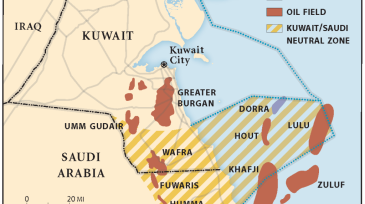
The joint oil field had been offline since 2015, due to an operational dispute.