Production

In the fourth development phase, a planned tieback would connect resources from two North Sea discoveries to existing infrastructure at the Johan Sverdrup field, pending project sanction.
This paper proposes a novel, real-time pump failure prediction method using machine learning with scaled load ratio to accurately predict pump failures using only surface pump load data.

Five agreements target more than 11 Tcf of offshore gas and include flare-reduction technology.
-
 The 2018 Legends of Artificial Lift are announced. Recipients will be honored at the 2018 SPE Artificial Lift Conference and Exhibition to be held in The Woodlands, Texas.
 -
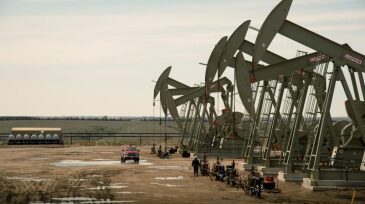
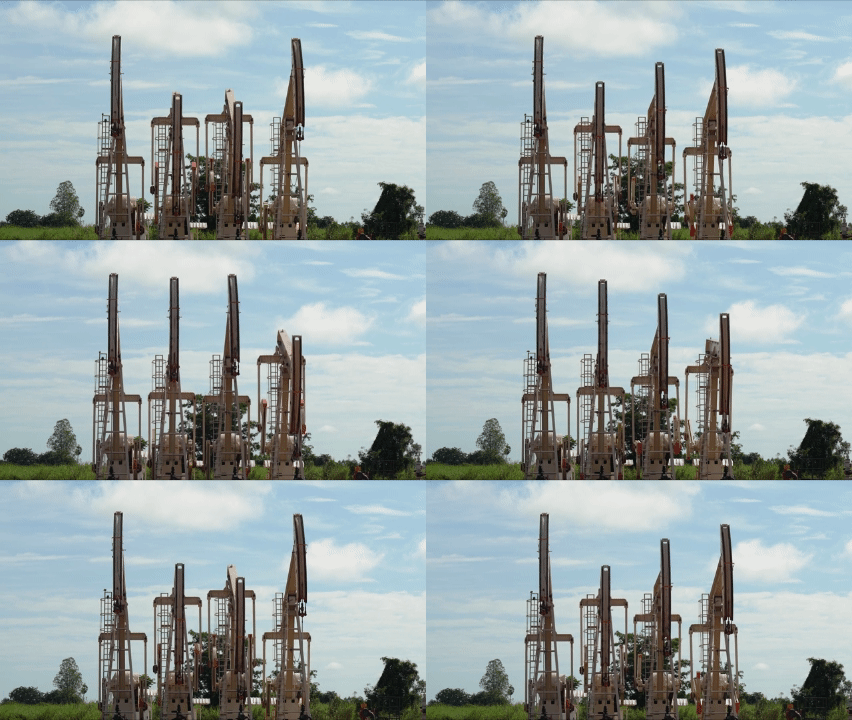
Hundreds of rod-lift wells in North Dakota are about to get a big upgrade.
-
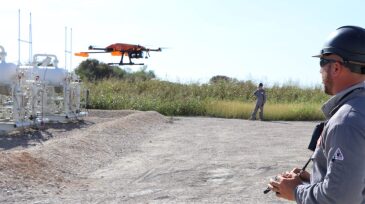
Venture groups spend their time evaluating hundreds of companies each year to only make a handful of investments. These two cover interesting ends of the upstream spectrum: aerial drones and downhole artificial lift.
-
The $28-billion Shah Deniz Phase 2 project off Azerbaijan will supply gas to Europe through the Southern Gas Corridor pipeline system.
-
This paper presents how a US onshore operator took a three-step approach to optimize more than 100 rod-pump wells. The approach involved data consolidation, automated work flows, and interactive data visualization.
-
This paper presents a comparison of conventional ESP methods and artificial-sump systems for which free gas and gas slugs are a challenge.
-
This paper describes the consequences of using an assumed R ratio in a gas-lift design that is not the same as the actual R ratio of the valve.
-
One of the more exciting aspects of artificial lift is the constant influx of new technologies and new ideas that the discipline invites. Inventors appear to be regularly developing “the next new thing” in artificial lift.
-
In Australia’s Surat Basin, gas is contained in hundreds of coal seams, which have highly variable properties and are grouped into four distinct reservoir zones of similar qualities.
-
The complete paper describes a recent directional coiled-tubing drilling (DCTD) job completed for an independent operator in the Appalachian Basin.