Production

At the inaugural SPE/ICoTA Asia Pacific Well Intervention and P&A Conference and Exhibition in Kuala Lumpur, industry leaders highlighted how high-fidelity well data, real-time diagnostics, and predictive technologies are reshaping intervention planning and execution to improve well performance, reduce risk, and optimize late-life asset management.

Sponsored
With operators under pressure to deliver more energy with fewer resources, predictable drilling performance is more important than ever. Discover how a unified digital workflow can turn drilling data into better decisions and consistent execution—providing the foundation for autonomous drilling and more predictable, profitable, and productive wells at scale.

Superior seeks to expand its international footprint through the acquisition, which is reportedly valued at $1.2 billion.
-
 As Africa’s top oil producer, Libya is ramping up momentum—offering 22 exploration areas and welcoming BP back to Tripoli with a major deal.
 -
As US shale potentially stares at a production plateau, operators and service providers are turning to smarter tools to extend the life of aging plays.
-
Equinor and Shell plan to launch the joint venture—initially announced in late 2024—by the end of 2025, pending regulatory approvals.
-
While militant attacks halted construction at Mozambique’s onshore megaprojects, Eni began LNG exports using a floating production strategy, which now serves as the foundation for its ongoing development.
-
Japan’s largest power generator is focused on sourcing Haynesville natural gas production for Gulf Coast export as LNG.
-
Secondary and tertiary efforts are critical for sustaining the productive lives of unconventional plays.
-
Over a dozen new projects aim to keep US offshore output near 1.8 million B/D through next year.
-
Spanish yard will prep the almost 40-year-old FPSO for redeployment opportunities for new owner.
-
Best practices are not static; they evolve alongside advancements that redefine what is achievable.
-
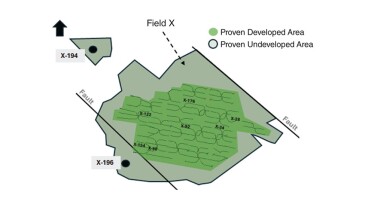
This study leverages oil-fingerprinting technology and geochemical data to evaluate the fluid connectivity between a main field and its stepout wells.