

R&D/innovation

German startup Telura's electric-pulse drilling system is designed to fracture granite without melting or vaporizing the rock.

Operators struggle to understand proppant placement beyond the fracture, and that’s the information that could be the key to boosting EUR.

High-risk, high-reward projects focused on stimulation, enhanced recovery, and field-scale deployment are eligible under the DOE’s new UNLOCK initiative.
-
 The variables defining drill-bit performance cover a lot of ground. There is a lot of attention given to cutters studding diamond drill bits, but just as important are what is in the rest of the drillstring and the decisions made by the driller.
-
For decades, the industry has worked to realize the potential of gathering seismic data in wells. But it is a hostile environment for standard equipment. An inventor has developed a fiber optic system that can handle the heat, but he needs backers to see if it can deliver in the ground.
-
The lifespan of a huge, old oil field in Oklahoma is now linked to a fertilizer plant 68 miles away. Chaparral Energy is capturing 45 million ft3/D of carbon dioxide (CO2) that had previously been vented into the atmosphere in Coffeyville, Kansas, compressing it, and sending it via a pipeline.
-
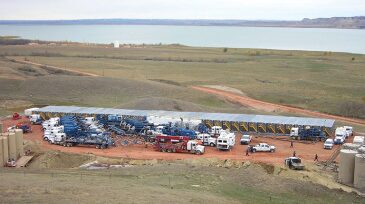
Tests showing increased recoveries in the Bakken formation using CO2 could have significant implications for the upstream oil and gas industry.
-
Oxane Materials' advanced cerammic proppant travels farther during fracturing in larger quantities, thereby leading to smoother, higher flows of oil and gas.
-
The rapid growth of progressing cavity pumps is an example of how new uses continue to emerge for older technology.




Page 45 of 45