Reservoir characterization

This paper presents a case study from a mature field redevelopment project where pulsed neutron logging was integrated with advanced reservoir modeling to improve the understanding of fluid-contact dynamics and optimize new horizontal well placement.

This paper aims to showcase examples of how integrated analysis of surveillance data in the Azeri-Chirag-Gunashli field has improved reservoir understanding and informed reservoir-management decisions.

This work applies fuzzy logic, a well-established artificial-intelligence technique, to quantitatively assess connectivity between injectors and producers in a giant presalt field in the Santos Basin of Brazil.
-
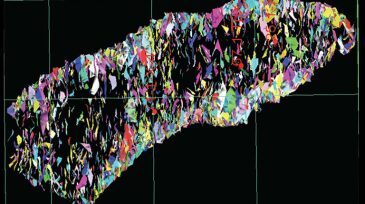
 The authors present a novel data-driven tool for fast fracture identification in post-stack seismic data sets.
 -
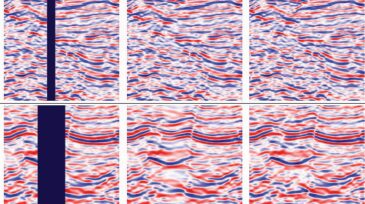
Seismic imaging provides vital tools for the exploration of potential hydrocarbon reserves and subsequent production-planning activities. The acquisition of high-resolution, regularly sampled seismic data may be hindered by physical or financial constraints.
-
The types of advancements made in real-time drilling data acquisition and processing are now on the doorstep of the North American completions sector. Technology developers are banding together under the umbrella of “coopetition” in a bid to change the way producers fracture tight reservoirs.
-
Applications development in reservoir geomechanics has grown exponentially in recent years, taking advantage of significant computer breakthroughs. Data integration and multidisciplinary strategies are key to advancing integrated reservoir geomechanics capabilities.
-
ConocoPhillips has pulled out of the much-hyped Louisiana Austin Chalk play after the company’s test wells yielded a gusher of water. Meanwhile, an Australian operator flying under the radar continues to pursue the adjacent-but-even-more-challenging Tuscaloosa Marine Shale.
-
In this paper, the authors discuss the characterization process for GR tools and how they behave in boreholes different from the one used in the University of Houston (UH) GR characterization pit.
-
This paper discusses a study undertaken to gain better understanding of nuclear magnetic resonance (NMR) characteristics of volcanic reservoirs with different lithologies.
-
For this year’s feature, the selected papers provide innovative work flows that assist in determining productivity, reduce the effect of uncertainty conditions, and spark rejuvenation.
-
A new pulsed-eddy-current (PEC) electromagnetic (EM)-based tool called an enhanced pipe-thickness-detection tool (ePDT) has been introduced for the corrosion inspection of multiple pipes.
-
Merging tried-and-true physics-based models with data science is bolstering the Houston independent’s reservoir-engineering work on its deepwater and shale assets.