Reservoir characterization

This paper presents a case study from a mature field redevelopment project where pulsed neutron logging was integrated with advanced reservoir modeling to improve the understanding of fluid-contact dynamics and optimize new horizontal well placement.

This paper aims to showcase examples of how integrated analysis of surveillance data in the Azeri-Chirag-Gunashli field has improved reservoir understanding and informed reservoir-management decisions.

This work applies fuzzy logic, a well-established artificial-intelligence technique, to quantitatively assess connectivity between injectors and producers in a giant presalt field in the Santos Basin of Brazil.
-
 Automated image-processing algorithms can improve the quality and speed in classifying the morphology of heterogeneous carbonate rock. Several commercial products have produced petrophysical properties from 2D images and, to a lesser extent, from 3D images.
 -
The complete paper presents a technical discussion of a new microsampling technique for LWD and a corresponding wellsite technique to provide compositional interpretation, contamination assessment, reservoir-fluid compositional grading, and reservoir compartmentalization assessment.
-
In tectonically influenced regions, potential hydrocarbon traps are subject to complex states of stress. This scenario often translates into severe strike/slip (SS) and thrust-fault or reverse-fault (TF/RF) stress states.
-
Duri Field in Indonesia is the largest active steamflood project in the world. The field produces 73,000 BOPD, and 10,000 optimization jobs are executed annually to support base production.
-
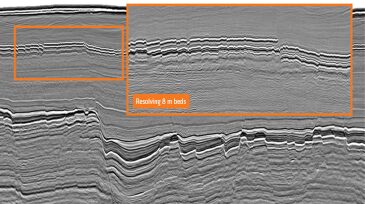
An ultrahigh-density high-resolution data set from the Hammerfest Basin is now available from PGS. The area is thought to contain around half of the undiscovered resources on the Norwegian continental shelf, according to the Norwegian Petroleum Directorate.
-
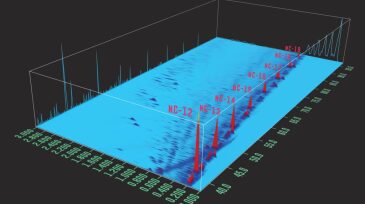
SponsoredDeveloping a reservoir with current capex constraints requires innovative technology to provide reliable reservoir production insight. This article describes how chemical tracer technologies can be integrated into reservoir development plans to reduce risk, minimize capex, and maximize ROI.
-
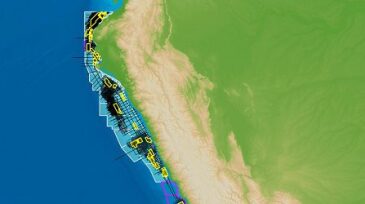
The seismic-data company has announced the completion of its offshore Peru 2D and 3D seismic data set, consisting of 19 rectified and merged 2D seismic surveys and 21 rectified and merged 3D seismic surveys.
-
This paper presents a coupled 3D fluid-flow and geomechanics simulator developed to model induced seismicity resulting from wastewater injection.
-
Fluid saturation isn't what it used to be when it comes to unconventional reservoirs. Our guest is among those sharing new research to discuss the shale sector’s changing perspectives on the importance of mobile hydrocarbons vs. immobile hydrocarbons.
-
Knowing which horizon crude oil flows from and in what proportions has been a major challenge for shale producers. Increasingly, they are turning to new technology to find the answer.