Reservoir simulation

This paper presents a high-fidelity, reservoir-centric stimulation-to-production modeling workflow to prevent fracture-driven interactions.

This work elaborates on recommended practices for calibrating a numerical model to a set of available infill-well field observations.

Known as Arena, the collaboration aims to improve decision-making across increasingly complex reservoirs and growing volumes of subsurface data.
-
 This paper presents a physics-assisted deep-learning model to facilitate transfer learning in unconventional reservoirs by integrating the complementary strengths of physics-based and data-driven predictive models.
-
This article presents the application of a reinforcement learning control framework based on the Deep Deterministic Policy Gradient. The crack propagation process is simulated in Abaqus, which is integrated with a reinforcement learning environment to control crack propagation in brittle material. The real-world deployment of the proposed control framework is also dis…
-
A new program offers an affordable way to figure out if salt precipitation could be behind underperforming gas wells and suggests a path to higher production.
-
Artificial intelligence (AI) and machine learning (ML) technologies have rapidly progressed and have significantly affected traditional reservoir engineering, bringing innovative methodologies to reservoir simulations. However, it is essential to understand that these AI and ML technologies are only as effective and trustworthy as the data they are trained on.
-
This paper describes a work flow that integrates data analysis, machine learning, and artificial intelligence to unlock the potential of large relative permeability databases.
-
The objective of this study was to establish an efficient optimization work flow to improve vertical and areal sweep in a sour-gas injection operation, thereby maximizing recovery under operation constraints.
-
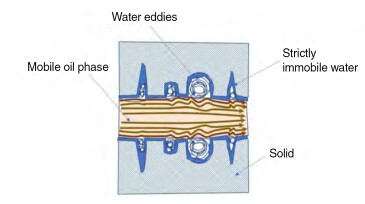
The objective of this paper is to present a fundamentals-based model of three-phase flow consistent with observation that avoids the pitfalls of conventional models such as Stone II or Baker’s three-phase permeability models.
-
In an industry where methane leaks and carbon dioxide storage are increasingly important concerns, finding new ways to seal leaks is a valuable skill.
-
Several options exist for large-scale hydrogen underground storage: lined caverns, salt domes, saline aquifers, and depleted oil/gas reservoirs. In this paper, a commercial reservoir simulator was used to model cyclic injection/withdrawal from saline aquifers and depleted oil/gas reservoirs. The results revealed the need to contain the stored volume with an integrated…
-
The authors of this paper present an approach integrating characterization of paleo zones, parameterization of paleo-zone conductivity, and application of flow profiles in a history-matching study of a dual-porosity/dual-permeability model.