Reservoir

A report commissioned by Havtil, the Norwegian Ocean Industry Authority, calls for better dialogue regarding pore-pressure uncertainty and higher-end drilling techniques like managed pressure drilling as methods to reduce the risk of well-control events.

The events will be co-located 3–5 May 2027 at Reliant Park in Houston, Texas.

This work describes a study in which distributed data parallel training, paired with a node-local caching pipeline, enabled efficient multigraphics-processing-unit scaling for a CO₂-storage graph-neural-network surrogate while maintaining generalization.
-
 A marked change from a decade ago, Appalachia, the Permian, and the Haynesville now represent almost half of total US gas production, EIA reports.
 -
The paper discusses the main factors affecting CO2 corrosion, provides an assessment of what to look for in major equipment, and details recommended material of construction and corrosion mitigation/control methods.
-
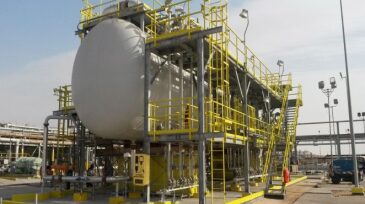
A pilot project demonstrates that facilities design plays an important role in providing sources of CO2 for the gas-handling process for injection into a carbonate formation as a tertiary recovery mechanism.
-
A demonstration project of carbon capture, utilization, and storage through enhanced oil recovery was conducted in Saudi Arabia. Surface facilities for such projects are expensive to build and involve tradeoffs in options based on economics for a given set of conditions.
-
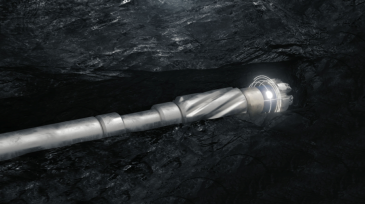
Shale explorers run very few logs into horizontal wells, making it difficult to understand the effects of reservoir depletion in tightly spaced wells. This new technology is trying to change that.
-
Operators are working with a young startup company to overhaul how the unconventional sector has traditionally interpreted one the most common tests used to influence well completion designs.
-
The rise of cube developments in the Permian Basin has introduced a new way of thinking for some of the region’s biggest players.
-
Seismic stimulation, achievable with the implementation of a single tool, requires significantly lower investments than gas, thermal, and chemical injection methods, with minimal environmental impact.
-
This paper bridges the gap between operational petrophysicists and FTS specialists, introducing an automated work flow by which petrophysicists can conduct FTS jobs.
-
This paper aims to develop new and improved empirical viscosity correlations through available field measurements on the Norwegian Continental Shelf (NCS).