Reservoir

A report commissioned by Havtil, the Norwegian Ocean Industry Authority, calls for better dialogue regarding pore-pressure uncertainty and higher-end drilling techniques like managed pressure drilling as methods to reduce the risk of well-control events.
The events will be co-located 3–5 May 2027 at Reliant Park in Houston, Texas.

This work describes a study in which distributed data parallel training, paired with a node-local caching pipeline, enabled efficient multigraphics-processing-unit scaling for a CO₂-storage graph-neural-network surrogate while maintaining generalization.
-
 Part of what makes DME an intriguing EOR technology is that it is soluble in both water and oil—with a preference for the latter. Shell’s plan is to add DME to the waterflooding stream to reach a concentration of about 16%, the upper limit of its dissolvability.
 -
Since 2006, production from gas injection has outstripped that from thermal, and is continuing to grow. Even though industry conditions remain tough, EOR is expected to be increasingly important in the future, with the possibility of further uptake of it linked to the climate-change agenda.
-
The polymer-injection project in the Dalia field, one of the main fields of Block 17 in deepwater Angola, represents a world first for both surface and subsurface aspects.
-
The Loma Alta Sur (LAS) field is a multilayer fluvial sandstone reservoir in the Neuquén basin of Argentina. Colloidal-dispersion-gel injection was considered a viable strategy to improve oil recovery in the field after early water breakthrough.
-
This paper describes a gas-injection pilot that has been implemented in offshore Middle East carbonate reservoirs to assess injectivity, productivity, macroscopic-sweep efficiency, flow assurance, and operational efficiency in a field that has a long water-injection history.
-
The operator has initiated a cyclic-steam-stimulation project in the Opal A diatomite of the Sisquoc formation on the Careaga lease in the Orcutt oil field in Santa Barbara County, California. This paper discusses steam-injection step-rate tests (SRTs) for this asset as part of its expansion.
-
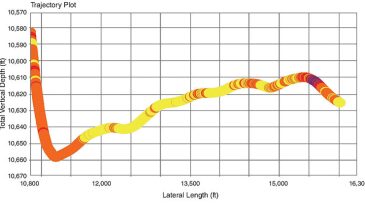
The force required to drill through a rock is a direct test of its strength and stiffness. Developing a reliable measure of the properties of rock based on the force required to drill a long lateral is a large challenge.
-
One of the biggest ways to lower the cost of production from shale would be to identify zones that are productive, or not, before fracturing them.
-
Permanent downhole gauges (PDGs) can provide a continuous record of flow rate and pressure, which provides extensive information about the reservoir. In this work, a machine-learning framework based on PDG data was extended to two applications: multiwell testing and flow-rate reconstruction.
-
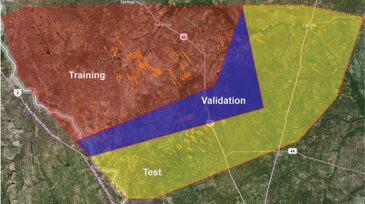
The authors present a geology-driven deep-learning estimated-ultimate-recovery (EUR)-prediction model for multistage hydraulically fractured horizontal wells in tight gas and oil reservoirs.