Reservoir

This case study describes how edge computing and industrial internet of things platforms were deployed to automate and optimize production operations across four distinct basins.

This case study presents a procedure in which the operator compared production from wells with adjusted wettability to a control group, finding that the adjustments resulted in significant improvements in production and reductions in produced water.

This year’s selected papers showcase meaningful advances across condensate‑rich tight gas, tight sandstones, and coalbed methane reservoirs, each contributing new tools for improving predictability and field-development efficiency.
-
 E&P independent Energean has awarded Halliburton a contract to provide services for drilling up to five wells offshore Israel in collaboration with Stena Drilling.
 -
New case studies from this year's Offshore Europe were a reminder of how sustaining subsea reservoirs as they age often calls for determined and innovative engineers.
-
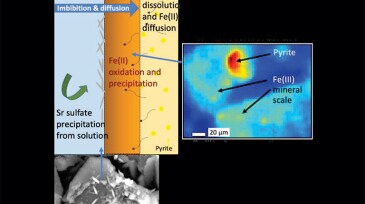
The obsession with better hydraulic fracturing has steadily pushed on shale production in year one, but the decline remains steep. Chemistry could help explain, and perhaps extend, the short productive life of these wells.
-
Traditionally, wireline or logging-while-drilling formation-testing technology has been the most accepted means of reservoir fluid characterization. But when those fluids are contaminated by mud filtrate, acoustic data can be used for fluid characterization during downhole sampling to successfully track and quantify small changes in oil compressibility.
-
This paper discusses the field implementation of a downhole chemical methodology that has positively affected overall productivity for a mature Kuwait field.
-
This paper presents a comprehensive comparison of two modeling-based approaches of fluid tracking for condensate allocation and gas usage.
-
This paper describes a technique used to derive stresses for a gas-storage field and then calibrate the 1D mechanical earth model of the field.
-
The authors report that nanopolysilicon can be used effectively as a depressurizing, injection-increasing agent.
-
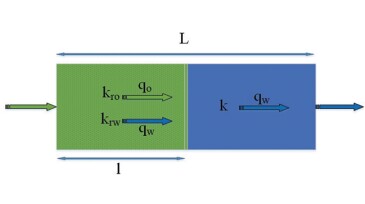
The authors develop and apply a laboratory protocol mimicking leakoff, shut-in, and flowback processes to evaluate the effects of fracturing-fluid additives on oil regained permeability.
-
Recent history has taught the unconventional sector that overly optimistic production forecasts can backfire. Going forward, one solution may be to combine financial and subsurface models to better communicate expectations.