Reservoir

The events will be co-located 3–5 May 2027 at Reliant Park in Houston, Texas.

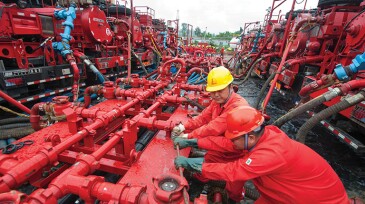
This case study describes how edge computing and industrial internet of things platforms were deployed to automate and optimize production operations across four distinct basins.
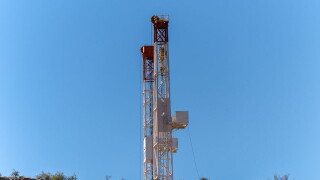
Output is rising fast in the South American shale play and putting Argentina on a course to soon reach 1 million B/D.
-
 The paper outlines examples from tight gas reservoirs in two fields in which openhole data was unavailable and petrophysical analysis was undertaken using cased-hole data.
 -
The papers explore innovative approaches developed by authors of SPE conference papers toward avoiding data bias, working around the absence of openhole data, and reducing the uncertainty of mass-transport complexes.
-
The work and the provided methodology provide a significant improvement in facies classification.
-
Interface Fluidics carved out a niche for itself in the oilfield testing sector a few years ago with a new alternative to coreflooding. Now, along with Equinor, the Calgary-based company is taking on another industry laboratory stalwart: the slimtube test.
-
The authors introduce and compare two quality-control approaches based on two different signal-processing practices.
-
Innovators at the Norwegian oil company have developed a machine-learning model that analyzes mud-gas data to predict the gas/oil ratio of wells as they are drilled—something that the industry has worked for decades to accomplish.
-
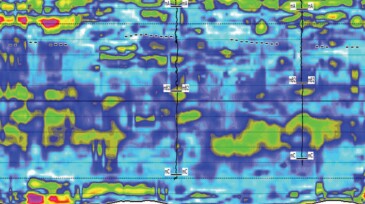
As I reviewed all the SPE seismic papers this time, the most noticeable thing was the diversity of themes and case histories that were covered.
-
In striving to boost production of shale gas and tight oil, China is trying enhanced-hydraulic-fracturing technology and real-time data analysis in the Sichuan shale basin. In Daqing’s tight-oil fields, an alternative fracture-completion strategy and post-stimulation flowback technology has been tested.
-
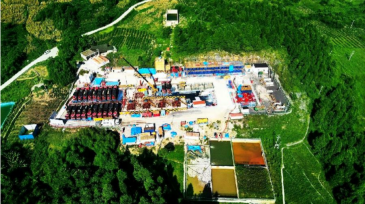
Sinopec is moving on to Phase 2 at its Weirong shale-gas development in Sichuan province after having completed Phase 1 by drilling 56 new wells over the past year and building new infrastructure to support increased natural gas production.
-
An investigation of casing damage led Chesapeake Energy and Well Data Labs to identify patterns in the treating pressure data that are useful markers when trouble is likely.