Reservoir

Canada’s development of large-scale digital drilling core libraries and open geoscience data platforms follows approaches pioneered in Australia, particularly Western Australia, through decades of government investment in geoscience data collection and preservation.

This study explores the carbon-capture and mineralization potential of ultramafic rock powders when exposed to flue gases generated from combustion of crude oil and mesquite-derived charcoal.

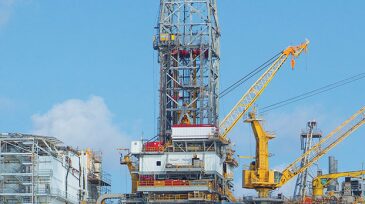
This paper documents the testing, integration, and field deployment of a metal expandable packer used as an openhole toe isolation plug in a deepwater well under high-pressure, high-temperature conditions.
-
 Although refracturing is a topic that has gained a lot of interest, many shale producers have been sitting on the sidelines because early results did not justify the spending
 -
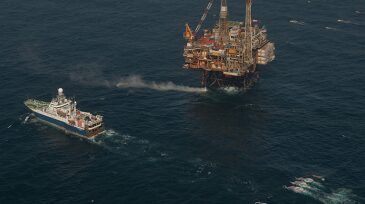
New seismic data gathering techniques promise better images for less by gathering more data quicker, seeing past obstructions, and seeking out scarce frequencies.
-
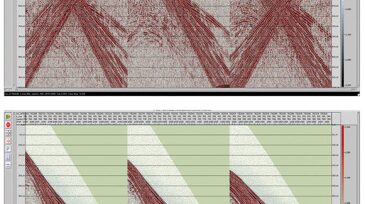
The word “broadband” is used to sell a lot of what is new in offshore seismic. It can mean different things depending on who is speaking.
-
Companies are using an increasing number of sound shots to gather more data in a shorter time frame.
-
Developing the Mad Dog discovery appeared to be high-risk because of the difficulty in mapping the subsurface because of the thick layer of salt underlying the region.
-
Newly developed ambient seismic imaging methods provide valuable information throughout the life cycle of an unconventional field.
-
A tight gas carbonate reservoir with no oil rim in a supergiant onshore gas field in Abu Dhabi was targeted for stimulation during a field review to increase field production.
-
To understand production from shale reservoirs, the role of hydraulically induced fractures, natural fractures, and their interaction in a formation must be captured.
-
An 18-well numerical-simulation model was built to represent an operator’s Lower Shaunavon waterflood-pilot area. Numerical simulation was used, and a history match on the pilot area was performed.
-
Estimates of tight-reservoir hydrocarbon reserves continue to vary with uncertainty. What is known with certainty, though, is that current recovery rates are low and the upside is substantial.