Reservoir

Canada’s development of large-scale digital drilling core libraries and open geoscience data platforms follows approaches pioneered in Australia, particularly Western Australia, through decades of government investment in geoscience data collection and preservation.

This study explores the carbon-capture and mineralization potential of ultramafic rock powders when exposed to flue gases generated from combustion of crude oil and mesquite-derived charcoal.

This paper documents the testing, integration, and field deployment of a metal expandable packer used as an openhole toe isolation plug in a deepwater well under high-pressure, high-temperature conditions.
-
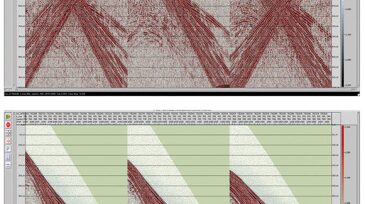
 The word “broadband” is used to sell a lot of what is new in offshore seismic. It can mean different things depending on who is speaking.
 -
Companies are using an increasing number of sound shots to gather more data in a shorter time frame.
-
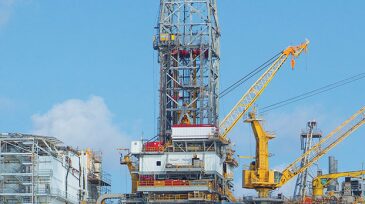
Developing the Mad Dog discovery appeared to be high-risk because of the difficulty in mapping the subsurface because of the thick layer of salt underlying the region.
-
Enventure Global Technology is working to convince operators that its solid expandable steel liners perform better than chemical diverter agents for refracturing operations. Its technology is called the ESeal ReFrac Liner.
-
The pursuit of sweet spots in unconventional oil and gas plays is driving the creation of an emerging set of data-driven systems to measure, map, and predict how wells will perform in unconventional reservoirs.
-
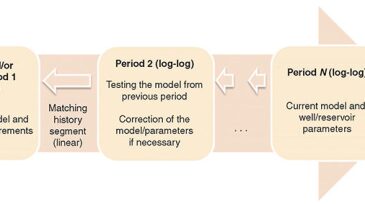
Permanent downhole gauges (PDGs) provide vast amounts of pressure-transient and rate data which may be interpreted with improved pressure-transient-analysis (PTA) approaches to gain more knowledge about reservoir dynamics.
-
The Bakken Petroleum System, which includes the Bakken and Three Forks shales in North America, is estimated to hold as much as 900 billion bbl of original oil in place.
-
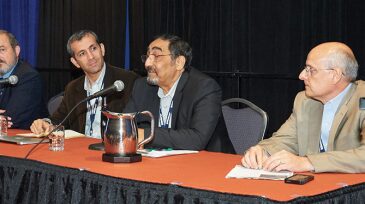
At the recent 2015 Unconventional Resources Technology Conference, a major theme was how companies can improve performance without increasing the size of their budget.
-
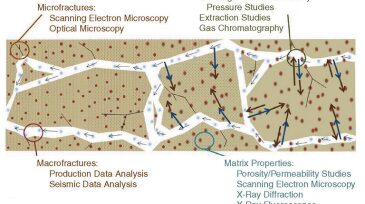
The label unconventional oil and gas stubbornly hangs on because these formations cannot be understood using the rules of conventional petroleum engineering.
-
This paper focuses on the aspects of proppant selection and adequate fracture-conductivity placement, with the goal of improving well productivity and cumulative recovery.