Reservoir

Industry experts at URTeC assessed more than a decade of unconventional growth while discussing where productivity gains will come from next.

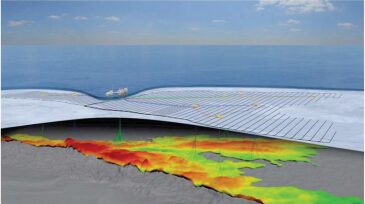
The technology has passed its first phase of qualification, with 84 nodes placed on the seafloor at a depth of 2,000 m to acquire 4D seismic data in the pre-salt Santos Basin.

Chevron and Halliburton describe how they built and deployed the fully autonomous closed-loop fracturing system that enables subsurface-driven optimization.
-
 Unconventional producers around the world have been hamstrung by expensive and cumbersome options when it comes to obtaining reservoir data. Among the latest ways to break past these barriers is a new method developed by Canadian researchers and field tested in Australia’s unconventional frontier.
 -
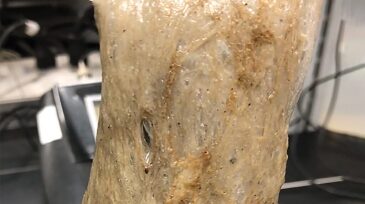
The source of gummy, damaging polymer gunk that has flowed from Oklahoma oil wells is becoming clear, and one of the lessons learned is that shale plays require petroleum engineers to learn more about chemistry.
-
Before the giant Johan Sverdrup field had produced even one barrel of oil, operator Equinor and its license partners set a recovery ambition of greater than 70% for the field.
-
The complete paper discusses optimization of a development plan involving low-salinity water injection.
-
Decline-curve analysis is one of the more widely used forms of data analysis that evaluates well behavior and forecasts production and reserves. This paper presents technologies that apply DCA methods to wells in an unbiased, systematic, intelligent, and automated fashion.
-
While the ongoing trends in data science and engineering analytics are going to show more benefits in lowering production costs and increasing efficiencies, the well-established reservoir and production engineering disciplines will continue to be critical for reservoir performance improvements.
-
The proposed restructuring plan aims to eliminate about $74 million of the company’s debt.
-
SponsoredPolymer flooding increases the RF up to 20% at $3 to $6 per extra bbl of oil. It also contributes towards reducing CO2 emission by 3–6 times per bbl. It’s a proven technology with more than 300 projects worldwide. SNF offers modular plug and pump facilities connected to existing infrastructure.
-
Based on the early results from mass shut-ins of shale wells, it did not harm long-term production and it paid a short-term dividend with more oil flowing in the days after restarting.
-
ExxonMobil is reluctant to join other big oil companies writing down the value of their reserves. It could chop its reserves by 20%, but it has not made a final decision.