Reservoir

Three papers are highlighted as the primary contributions because of their broad industry relevance. They focus on improving formation particle-size characterization, expanding the application of openhole gravel packs in depleted and compartmentalized reservoirs, and advancing the understanding of capillary pressure in sand production.

This paper aims to establish a set of best practices for generating particle-size-distribution data from core samples.

This paper discusses the successful execution of two openhole gravel-pack completions in two Gulf of Mexico fields with depleted reservoirs.
-
 With the recent drop in oil prices, operators are shifting to optimization of existing assets with minimal costs. For mature floods (water, chemical, and CO2), one low-cost optimization strategy is the intelligent adjustment of well-rate targets.
 -
Permanent downhole gauges (PDGs) can provide a continuous record of flow rate and pressure, which provides extensive information about the reservoir. In this work, a machine-learning framework based on PDG data was extended to two applications: multiwell testing and flow-rate reconstruction.
-
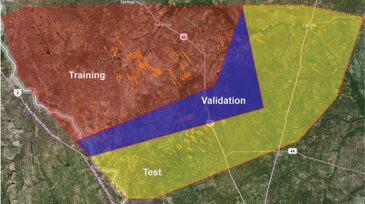
The authors present a geology-driven deep-learning estimated-ultimate-recovery (EUR)-prediction model for multistage hydraulically fractured horizontal wells in tight gas and oil reservoirs.
-
In this paper, the authors introduce a novel semianalytic approach to compute the sensitivity of the bottomhole pressure (BHP) data with respect to gridblock properties.
-
This paper critically investigates the impact of using realistic, inaccurate simulation models. In particular, it demonstrates the risk of underestimating uncertainty when conditioning real-life models to large numbers of field data.
-
History matching is only one part of something more comprehensive—reservoir modeling.
-
In this paper, the authors derive and implement an interwell numerical simulation model (INSIM) that can be used as a calculation tool to approximate the performance of a reservoir under waterflooding.
-
The importance of reducing emissions of methane, a short-lasting but powerful atmospheric greenhouse gas (GHG), received close attention from panelists at an IHS CERAWeek strategic dialogue, Tightening the Valves on Global Methane Emissions.
-
When it comes to hydraulic fracturing, steadiness may not be a virtue. That was the conclusion of a test to see if rapid pump rate variations would lead to greater production than conventionally fractured stages when the pressure was held steady.
-
Understanding how much rock is being stimulated and propped is critical for unconventional producers. New imaging methods using electromagnetic energy or acoustic microemitters could represent a milestone in understanding what is left behind after fracturing.