Reservoir

This paper documents the testing, integration, and field deployment of a metal expandable packer used as an openhole toe isolation plug in a deepwater well under high-pressure, high-temperature conditions.

Three papers are highlighted as the primary contributions because of their broad industry relevance. They focus on improving formation particle-size characterization, expanding the application of openhole gravel packs in depleted and compartmentalized reservoirs, and advancing the understanding of capillary pressure in sand production.

This paper aims to establish a set of best practices for generating particle-size-distribution data from core samples.
-
 If optimized to scale, fast fission reactors could play a role in reducing emissions in field operations by producing carbon-free electricity.
 -
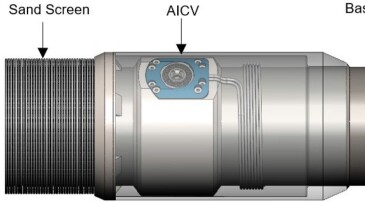
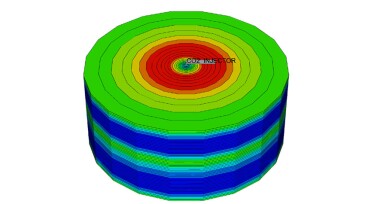
Oil production from thin-oil-rim fields can be a challenge considering early gas breakthrough and high gas/oil ratio. This study evaluates the performance of autonomous inflow control valves (in comparison with inflow control devices and sand screens) and their effectiveness in improved oil recovery in such fields.
-
Samsung E&A takes home $6 billion of the total amount as EPC contractor.
-
As the biggest US companies grow bigger, the advantage of scale becomes clearer.
-
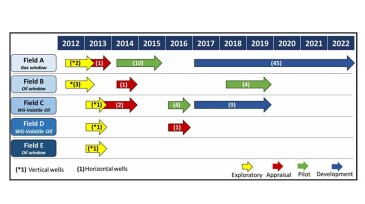
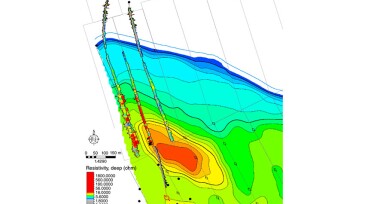
A 44-well development tests what ConocoPhillips has learned about maximizing the value of the wells by figuring out how they drain the reservoir.
-
The physical characteristics of heavy oil and the formations in which it is found are often unique to a region or even to a specific asset, so recovery techniques must be tuned, adapted, and sometimes invented for each region. Creative professionals around the world are taking up this challenge and sharing their work with us in a wealth of excellent recent publication…
-
This paper develops a deep-learning work flow that can predict the changes in carbon dioxide mineralization over time and space in saline aquifers, offering a more-efficient approach compared with traditional physics-based simulations.
-
This paper explains how an operator’s projects in the Vaca Muerta have become more-efficient and cost-effective by increasing production and reducing well-delivery-cycle time while fostering the long-term sustainability of the project.
-
This paper describes the potential, challenges, and opportunities of using a modified steam-assisted gravity drainage configuration in the Mukhaizna heavy oil field in suboptimal operating conditions.
-
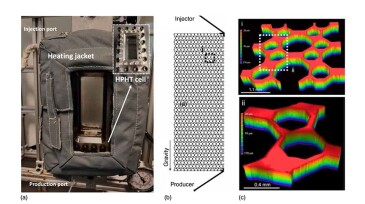
This study aims at understanding the effect of a surfactant known as a high-temperature emulsifying agent as an additive to the steam-assisted gravity drainage process and the possibility of forming oil-in-water emulsions.