Reservoir

This paper aims to establish a set of best practices for generating particle-size-distribution data from core samples.

This paper discusses the successful execution of two openhole gravel-pack completions in two Gulf of Mexico fields with depleted reservoirs.

This study explores the carbon-capture and mineralization potential of ultramafic rock powders when exposed to flue gases generated from combustion of crude oil and mesquite-derived charcoal.
-
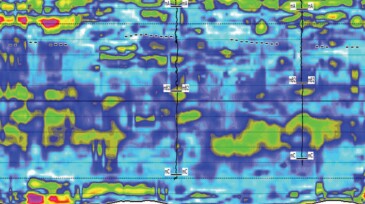
 The papers explore innovative approaches developed by authors of SPE conference papers toward avoiding data bias, working around the absence of openhole data, and reducing the uncertainty of mass-transport complexes.
 -
The work and the provided methodology provide a significant improvement in facies classification.
-
Interface Fluidics carved out a niche for itself in the oilfield testing sector a few years ago with a new alternative to coreflooding. Now, along with Equinor, the Calgary-based company is taking on another industry laboratory stalwart: the slimtube test.
-
The authors introduce and compare two quality-control approaches based on two different signal-processing practices.
-
Innovators at the Norwegian oil company have developed a machine-learning model that analyzes mud-gas data to predict the gas/oil ratio of wells as they are drilled—something that the industry has worked for decades to accomplish.
-
As I reviewed all the SPE seismic papers this time, the most noticeable thing was the diversity of themes and case histories that were covered.
-
In striving to boost production of shale gas and tight oil, China is trying enhanced-hydraulic-fracturing technology and real-time data analysis in the Sichuan shale basin. In Daqing’s tight-oil fields, an alternative fracture-completion strategy and post-stimulation flowback technology has been tested.
-
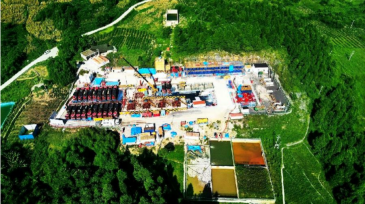
Sinopec is moving on to Phase 2 at its Weirong shale-gas development in Sichuan province after having completed Phase 1 by drilling 56 new wells over the past year and building new infrastructure to support increased natural gas production.
-
An investigation of casing damage led Chesapeake Energy and Well Data Labs to identify patterns in the treating pressure data that are useful markers when trouble is likely.
-
With only around 30 installations worldwide, ADNOC’s onshore team has seen enough results from its first “fishbone” stimulation to embark on a 10-well program that will decide a full development scheme.