Risk management

This paper presents an approach for safe, efficient, and cost-effective legacy well reabandonment.

A shared digital mindset across subsurface, subsea, and drilling and wells is accelerating well planning at Vår Energi.

The legacy of per- and polyfluoroalkyl substances (PFAS) is a persistent problem in many industries, including upstream oil and gas. In this Q&A, remediation expert Grant Scott presents the trouble with these “forever chemicals” and the mitigating efforts being used.
-
 An appraisal program involving the Bentley field located on the UK continental shelf has addressed the key technical concerns associated with developing viscous crude in an offshore environment.
 -
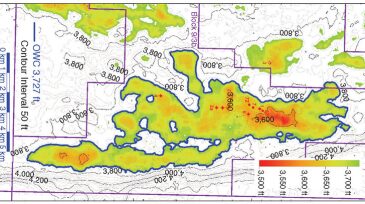
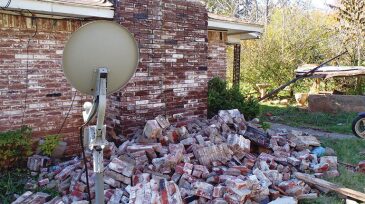
A sharp rise in seismic events in some areas of the United States where oil and gas production is booming is leading regulators and the industry to examine whether the two are related.
-
This paper illustrates and discusses inherent flaws in RMs and their potential effect on risk prioritization and mitigation, addressing several previously undocumented RM flaws.
-
This paper presents the principles and approaches used in API RP 17N, and discusses what it is in general and why it was written. It also describes the status of its recent update.
-
Every process plant presents a high number and diversity of valves that control the flow of feedstock, products, and service liquids and gases.
-
The United States’ top offshore regulator said his agency is adopting new policies and measures to improve its working relationship with the offshore industry.
-
As low as reasonably practicable (ALARP) is common for management of safety risks, but harder to apply to environmental risks. This paper explores the differences and proposes a modified method to support environmental risk analysis.
-
We are comfortable with the reality of swift intuitive judgement being the primary decision-making approach of experienced engineers in emergency situations. But as the engineer in the situation has less experience available to him/her, how do psychological factors affect outcomes?
-
The understanding of decision-making processes is critical in ensuring project success and safety. Project failures—and disasters—can result from the lack of understanding or implementation of sound principles.
-
In spite of massive investments in project management best practices and the organizations to implement them, major oil and gas projects continue to experience cost overruns and schedule delays. A root cause that has not been sufficiently explored is the built-in bias toward overconfidence.