Sand management/control

Three papers are highlighted as the primary contributions because of their broad industry relevance. They focus on improving formation particle-size characterization, expanding the application of openhole gravel packs in depleted and compartmentalized reservoirs, and advancing the understanding of capillary pressure in sand production.

This paper aims to establish a set of best practices for generating particle-size-distribution data from core samples.

This paper discusses the successful execution of two openhole gravel-pack completions in two Gulf of Mexico fields with depleted reservoirs.
-
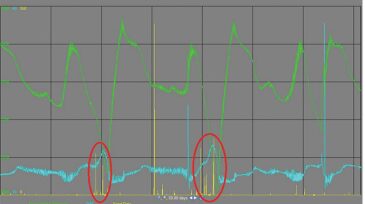
 Field examples presented in the complete paper describe principles of data acquisition with a sand-detection tool when run in combination with a production logging string and results of logging in slightly deviated wells completed with sand screens.
 -
The complete paper discuses a well with a history of sand production that exhibits long cyclic slugging behavior.
-
Sand-control-installation failures range from minor issues that can be remedied easily to catastrophic events that put the entire well and investment at risk.
-
Sand control has evolved over the years; however, the fundamentals of screen sizing have not changed. Particle-size distribution remains the basis for most designs. Laser diffraction has provided better definition of fines, and greater focus is placed now on particle-shape characterization.
-
A multizone water-injection project has ultimately proved a method of using intelligent completion interval-control valves in place of traditional sand-control completions in soft sand reservoirs.
-
In 2014, a research and development (R&D) project was initiated to increase the life expectancy of Gulf of Mexico (GOM) Miocene and Lower Tertiary water-injection (WI) wells, several of which had suffered a severe loss of injectivity within only a few years of completion.
-
This paper discusses a probabilistic flux and erosion model and work flow that extend the ability to estimate inflow through sand screens on a foot-by-foot basis along the wellbore using the well's completion details, production rate, and reservoir and bottomhole flowing pressures.
-
This paper proposes a new work flow to simulate water-hammer events, the resulting wellbore failure, and sand production in water injectors.
-
This paper presents the first successful application of ceramic sand screens offshore Malaysia. Ceramic sand screens were considered as a remedial sand-control method because of their superior durability and resistance compared with metallic sand screens.
-
In this paper, a new type of sand-consolidation low-viscous binding material, based on a combination of inorganic and organic components, is presented.